Bookbinding & Masonic Book Restoration by Paul Tronson – Master Bookbinder
This site is regularly updated
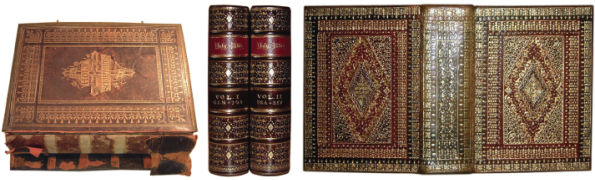
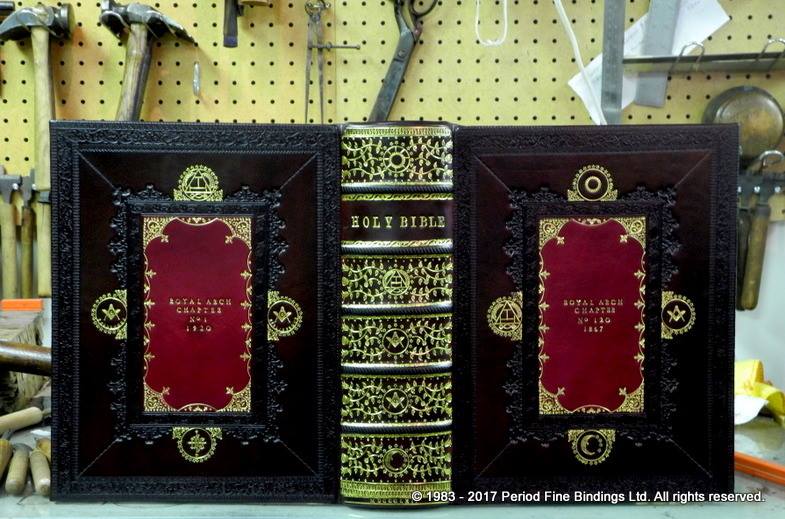
Paul Tronson is a Master Bookbinder who restores antiquarian books to period using traditional materials – hand-made to exacting formulae as his work here shows. Paul has also restored many rare and valuable Lodge Bibles and demonstrates in his work not only an in-depth knowledge of Masonic history, but also a rare grasp of traditional bookbinding techniques..
Bookbinding and Masonic Bibles
“Of all the antiquities within the Lodge, the Volume of The Sacred Law is the most important. The Great Light in Masonry, and The Rule and Guide for Masonic Faith and Practice is placed on the Master’s pedestal when the Lodge is opened, where the meetings are conducted in peace and harmony.
Most often, the Lodge Bible is the original that was gifted when the Lodge was first consecrated. But what Bible did Masons use before 1717, the year in which the first Grand Lodge was constituted? Prior to 1611 it is almost certain that the majority of them used the famous Geneva Bible, published in 1560. It was the first issue of the Bible to cut the text into chapters and numbered verses, its costs were low and it was the Bible of the Reformation.
In the Book of Genesis it printed the line ‘made themselves breeches’ instead of ‘made themselves aprons’ and henceforth became known as the ‘Breeches’ Bible.”
Masonic Bibles: Lodges and Their Bibles by Paul Tronson MQ Magazine Issue 17 April, 2006
The Authorized, or King James, Version was first printed in 1611, in black letter, large folio, with 1,400 pages. Because of a typographical error, Ruth III, verse 15, was printed with a ‘he’ instead of a ‘she’ and for that reason it was called the ‘“He” Bible.’
Copies of its now very rare first edition, in good condition, can be valued £50,000+. In the Second Issue, this Version contained another famous misprint, Matthew XXVI, 36, where ‘Jesus’ is printed as ‘Judas’.
The ‘Wicked Bible’ is the most notorious example, in it the ‘not’ was purposely omitted from certain of the Ten Commandments, for which Robert Barker and Martin Lucas, the King’s Printers, were hauled before the church and fined £300 by Archbishop Laud, and the edition of one thousand copies confiscated.
For a century the Authorized Bible was no doubt used by Masons as it was by everybody else, almost to the exclusion of any other version.
In 1717, John Baskett, an Oxford printer, published an edition of his own, which came to be named after him, The Baskett Bible was dubbed The “Vinegar Bible” because, in Luke XX, the word “vineyard” was misprinted “vinegar”.
The title page, for the first time in any Bible, consisted of a prospect of buildings. For this reason, and also perhaps because it had been published in 1717, or for both reasons, it became popular among Masons in America and Australia as well as in England. More often than any other, it is mentioned in the inventories which were incorporated in old Lodge minutes.
In 1750 John Baskerville became a designer of Type, a rival to the famous Caslon – whose typefaces are standard today. In 1758, Baskerville was elected printer to Cambridge University, and in 1763 he produced a large folio edition of the Bible.
It was not appreciated at the time, as it was expensive to produce and did not sell well, but has since become one of the classics of type design. Baskerville died in 1775, and any Lodge possessing a copy of his edition of 1763 may treasure it as a highly valuable item.
Masonic Lodges around the world have become custodians of not only rare and valuable Bibles, but Bibles with important historical significance.
The George Washington Inaugural Bible is considered an important historical relic for being the historical text sworn upon for the very first Presidency of the United States. The bible itself has subsequently been used in the inauguration ceremonies of several other presidents.
Bound in London in 1767, this Bible was brought to the colonies and given by Jonathan Hampton to the St. John’s Lodge in lower Manhattan three years later when he became its Grand Master.
Just before Washington was to take his oath of office on the steps of Federal Hall in New York City on 30 April 1789, it was discovered that there was no Bible on hand. The then New York Governor, Robert Livingston, a Masonic Grand Master, borrowed the Bible from St. John’s Lodge, which had meeting rooms just a short distance away. A statue of Washington marks the site in front of the present-day Federal Hall on Wall Street.
No printer in the colonies produced Bibles at the time, and the price of the London import, bound in maroon Moroccan leather with silver clasps, was probably close to a year’s wages for the average man.
Many Lodges may not have realised that they may be custodians of hidden treasures. Many innocent-looking VSLs could turn out to have very interesting histories.
Although these volumes are much loved, they may be badly thumbed and close to disintegrating and in need of rescuing now, before it becomes too late.
On a visit to Mother Kilwinning Lodge No. 0, I was shown two 16th century Geneva Bibles that had been stuck together with duct tape. These and other Masonic artefacts need to be sensitively restored to retain their value and preserved for future generations.
Masonic Bibles: Lodges and Their Bibles by Paul Tronson MQ Magazine Issue 17 April, 2006
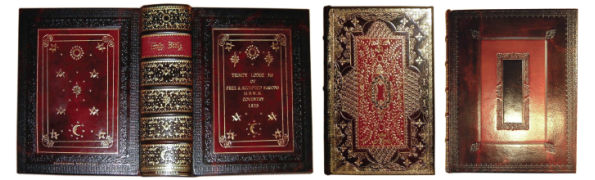
Restored Masonic Bibles
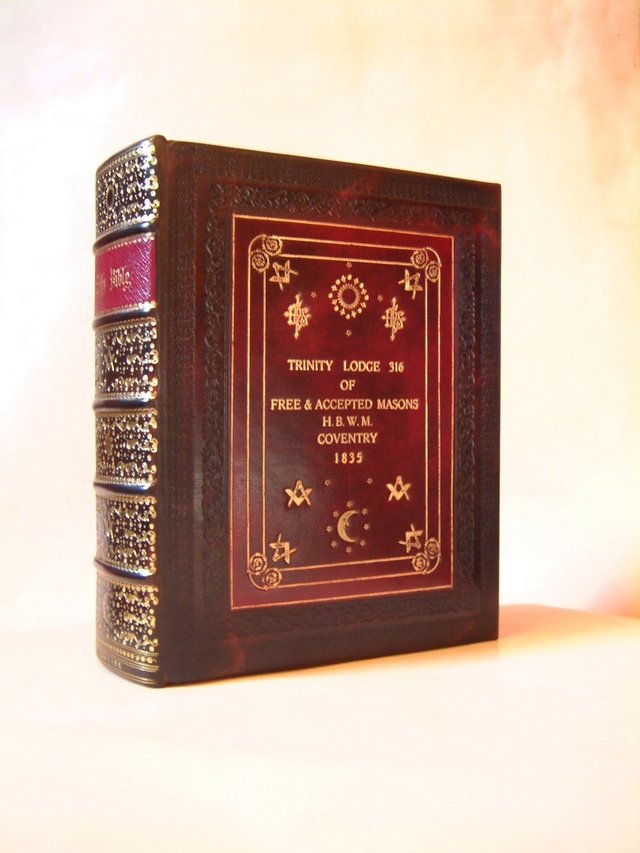
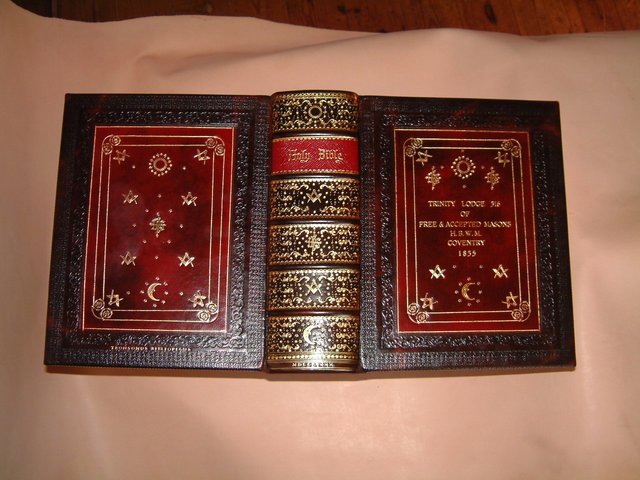
1780 Bible – Restored Exactly as the Original with Masonic Insignia
The book has been fully restored and bound in the colours of the masonic order of Holy Royal Arch.
The purple and scarlet colours are derived from hand-made vegetable dyes taken from ancient recipes. The gilt decoration is reproduced exactly as the original front and rear covers that have been lifted restored and incorporated inside the book.
Click on images to enlarge
Bookbinding and book restoration
For all your bookbinding and book restoration enquiries Email Paul at:
periodfinebindings@googlemail.com
Limited Edition Masonic Rarity – Subscribers Only

This book is a personal Masonic record of your journey through the Craft and all the other Orders from your initiation thru to Master of the Lodge, recording your Lodge Name and Number, dates of initiation, passing and raising, proposers, etc., allowing you to record your advancement through each office within your lodge.
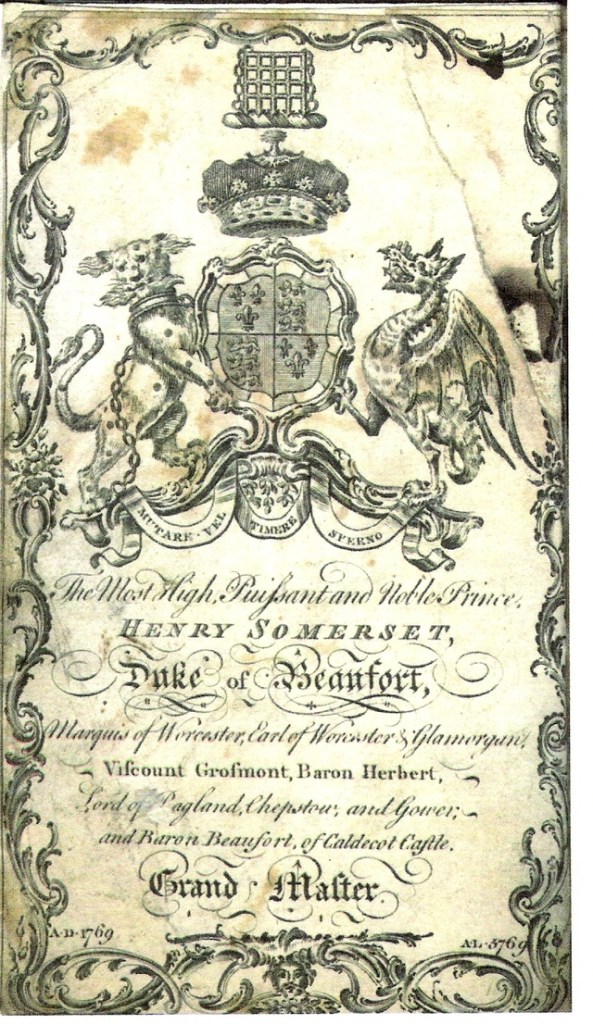
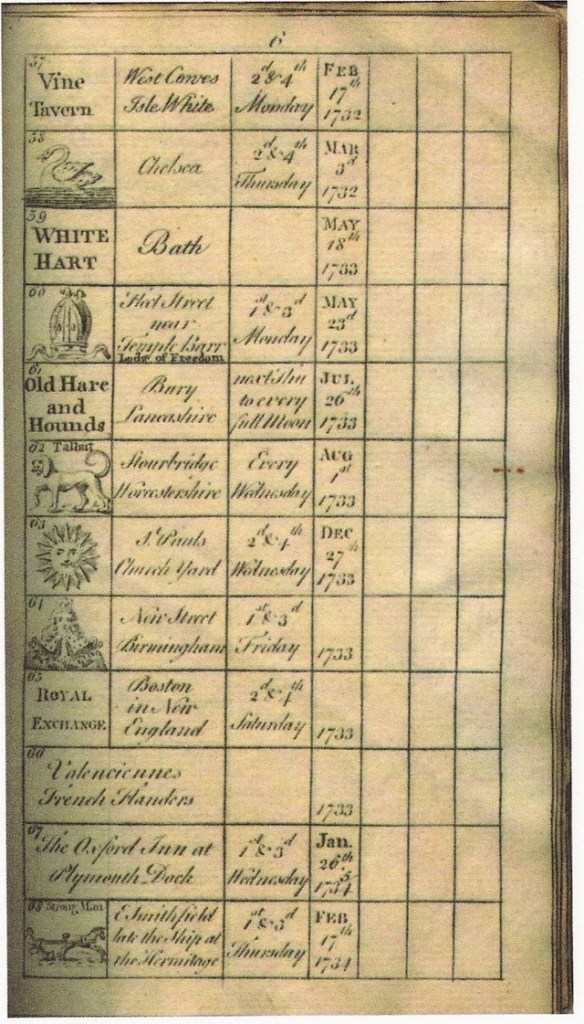
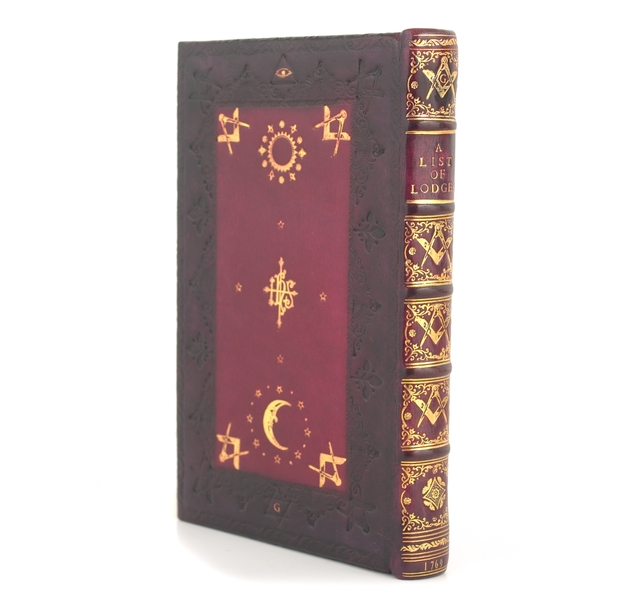
The book has been reproduced from the only existing copy of a List of Lodges that date from 1717 to 1769 containing the first four hundred Masonic lodges around the world consecrated by the Grand Lodge of London. The List of Lodges was found by the librarian of a provincial Masonic Temple, and was taken to Period Fine Bindings for restoration, and later permission was granted for it to be reproduced.
Printed on a quality laid paper and carefully aged to reflect the original, also incorporating a modern-day Masonic journal listing all the orders, interleaved with blank leaves to document your progress through the orders printed to your own specification.
Each page of the list is decorated with beautiful woodcut illustrations depicting Lodge names, dates of meetings and consecration.
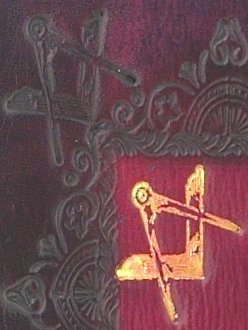
This superb full leather binding is individually hand-made to order using the finest materials, hand-marbled end papers, blind tooled borders, gilt Masonic devices.
Click on images to enlarge
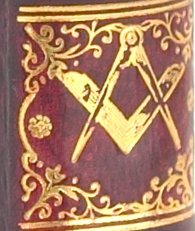
This is a subscribers edition only to order in which your name, your Lodge and Lodge number embellished in 23 carat gold leaf in Saxon black letter type face on the front cover.
If you’d like to immortalise your Masonic history and add your name
to our waiting list. email: tronson1@gmail.com
Next Page Removing Foxing and Mildew
All content and copyright are the property of Paul Tronson
Period Fine Bindings 1983 – infinity All rights reserved.


Leave a Reply