Welcome to issue 3 of my Irregular Newsletter.
Is it June already, how I’ve kept it going this long I’ll never know, it’s becoming too regular!
English Bookbinder –
Will the REAL Darwin genius please stand up
Just so you know that I still keep my ear to the ground in the book world, this month’s whisper is that the world’s largest Charles Darwin book collection has been bought by The Natural History Museum for nearly £1m. The acquisition is the most expensive in the museum’s 125-year history and was made possible thanks to a £175,000 grant by the Natural Heritage Memorial.
The Darwin Collection includes almost everything the naturalist published from 1829 onwards. Among the items are 470! editions of On the Origin of Species and a rare copy of Zoology of the Voyage of HMS Beagle, bound in original cloth, and a map of the Falkland Islands from the Beagle voyage.
Sadly this week Darwin’s tortoise “Harry” died of a heart attack aged 176, it seems difficult to believe that this creature travelled from the Galapagos Islands on the Beagle and was with Darwin during his explorations.
Experts found out only 50 years ago why “Harry” was always in a bad mood and never had any offspring after trying for many years, this was down to the fact that “Harry” was in fact “Harriet”….Darwin’s little joke maybe!
Interestingly I was going through my stock of quiterare medical and botanical books this week, when I chanced upon a fly leaf of a certain 18th century medical book which had been stuck down with sellotape. After carefully opening the page to my astonishment it was signed by a previous owner….. ERASMUS DARWIN, the GRANDFATHER of Charles.
(don’t worry there’s lots of pictures further down, this bit is called “education”)
For those interested, Charles Erasmus Darwin was born in 1731 and died in 1802. He studied at Cambridge and Edinburgh, and established his medical practice in Lichfield in the West Midlands (about a 45 minute drive from here). It was an immediate success, with patients travelling considerable distances for his consultations. At one stage he was offered – and refused – the post of royal physician to George III.
He had an extremely broad range of scientific interests. He was a founder member of the Lunar Society, whose members included some of the greatest innovators of the age: Josiah Wedgwood, Matthew Boulton and James Watt, and Joseph Priestley, who discovered oxygen. (I think we all discovered oxygen the moment we were born).
Erasmus’ own inventions and ideas varied enormously. A horizontal windmill invented in 1765 was made and used by Josiah Wedgwood. A carriage that would not tip over was designed in 1766. In 1771 he invented a speaking machine, a canal lift for barges and in 1778 he came up with a copying machine and a variety of weather monitoring machines that included a north-south airflow machine and a weather vane with the pointer in his study.
During the following decade his work continued. In 1783 he invented an artesian well and conducted research into the formation of clouds, the latter of which he published in 1788. Despite his many innovations, however, he retained NO patents. He felt they would have harmed his reputation as a doctor and instead encouraged his friends to pursue his ideas; they then patented their own, modified, versions.
Yet Erasmus was also one of the most successful poets of his time. He published several volumes of botanical verse that received great acclaim and proved stylistically influential to the likes of Wordsworth, Keats, Byron and Coleridge.
It was Erasmus Darwin who wrote the poem “Visit of Hope to Sydney Cove, near Botany Bay” published in 1789 in The Voyage of Governor Phillip to Botany Bay. The first four lines of the long sentimental work read: “Where Sydney Cove her lucid Bosom swells, Courts her young naives, and the storm repels; High on a rock amid the troubled air HOPE stood sublime, and wav’d her golden hair”. The poem was written to accompany the celebrated medallion made by Joshua Wedgwood from clay sent by Joseph Banks from Botany Bay.
The 1791 1st ed of The Botanic Garden will cost you around £2700.
Between 1794 and 1796 he published his book, Zoonomia. This employed rhyming couplets to discuss scientific topics, including a theory of how all life originated from one vital spark and from then became all the variety of animals on the planet. This theory would only be developed to its logical extent by his famous grandson, Charles.
So really it was Erasmus who originally came up with the evolution idea.
You can read more about his genius here at.
http://www.ucmp.berkeley.edu/history/Edarwin.html
So what has this got to do with bookbinding?………Absolutely nothing.
English Bookbinder – The “Sticky” Atlas
What have we been up to this month then?
Well the sticky Atlas got unstuck and re-bound, there were also quite a few creased and crinkled pages not to mention several leaves with half the text torn off and lost.
Click on images to enlarge
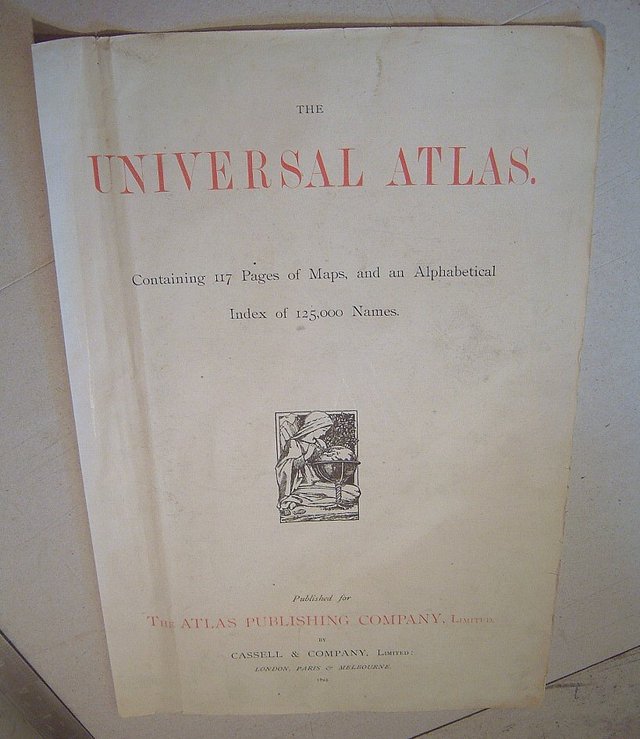
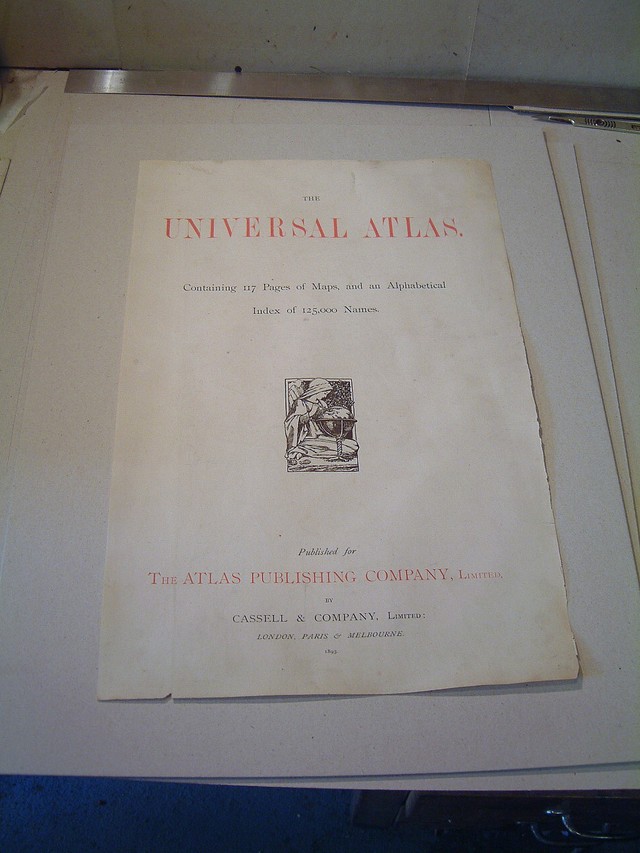
So how do you remove the creases?
Well not by ironing them out that’s for certain, that will just press the crease in place permanently, there is a method that leaves the page perfectly flat ….
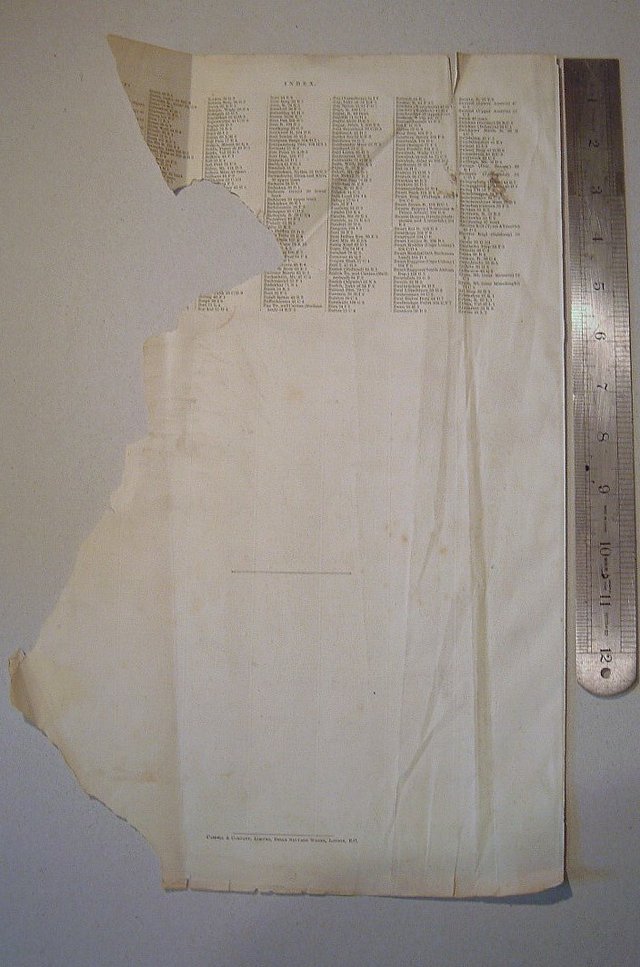
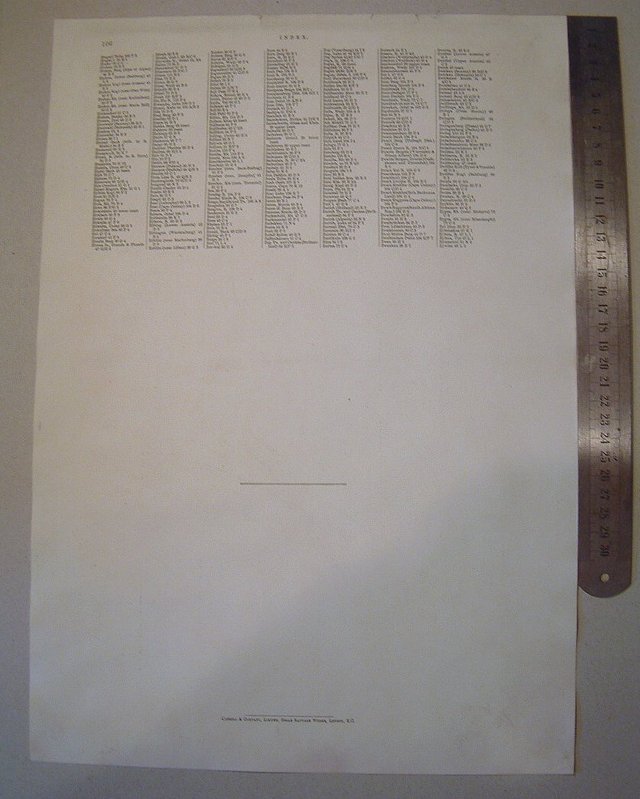
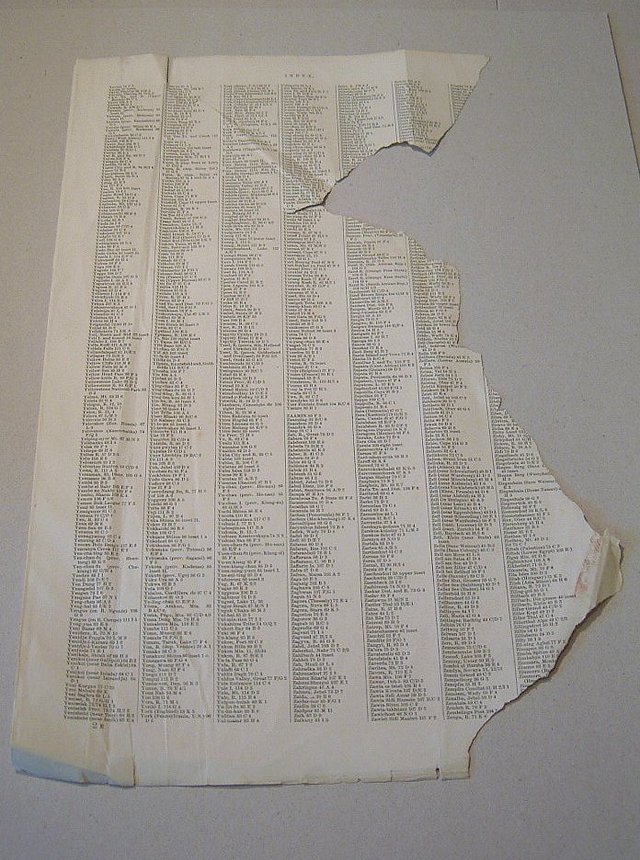
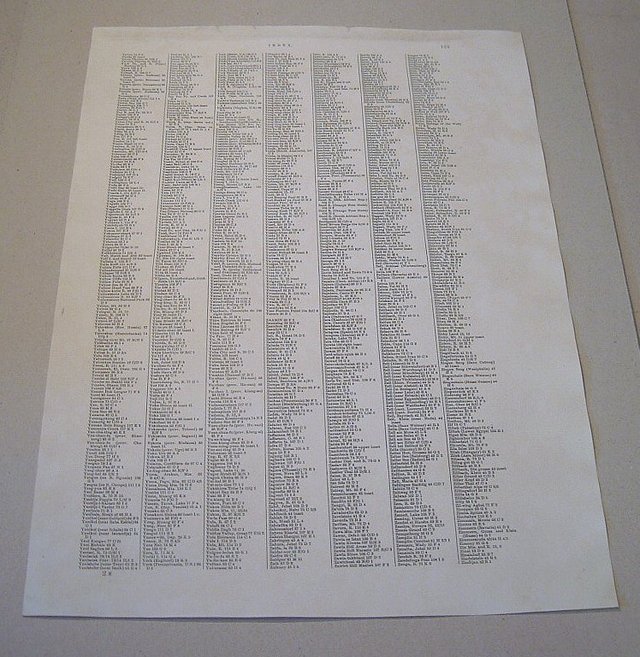
But that would be like telling you how to replace the missing text on this page!
After the pages were restored the Atlas was re-sewn on sunken cords incorporating its original compensation guards, the spine then re-rounded, and backed, head and tail bands were sewn in and the spine suitably lined incorporating a manilla hollow back.
Boards were made and fitted and false raised bands applied. The leather was chosen, cut and dyed using the resin from boiled mahogany chippings and oak bark. The Atlas was bound as a ½ binding with brown Victorian Jaconette cloth sides to match, and the spine decorated in gold leaf.
The sides were rolled off in gold, the spine dated and a red leather label cut, pared, applied and hand lettered in gold.
Sound’s easy doesn’t it? …………..Well there you go.
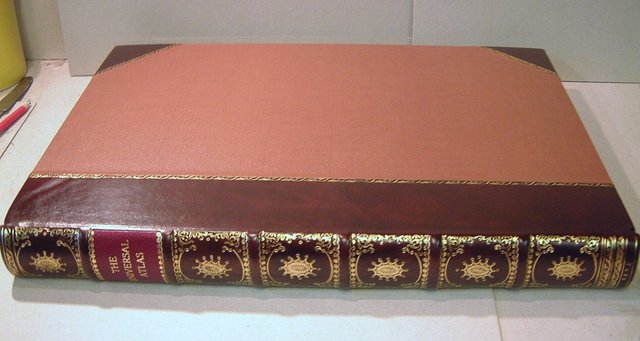
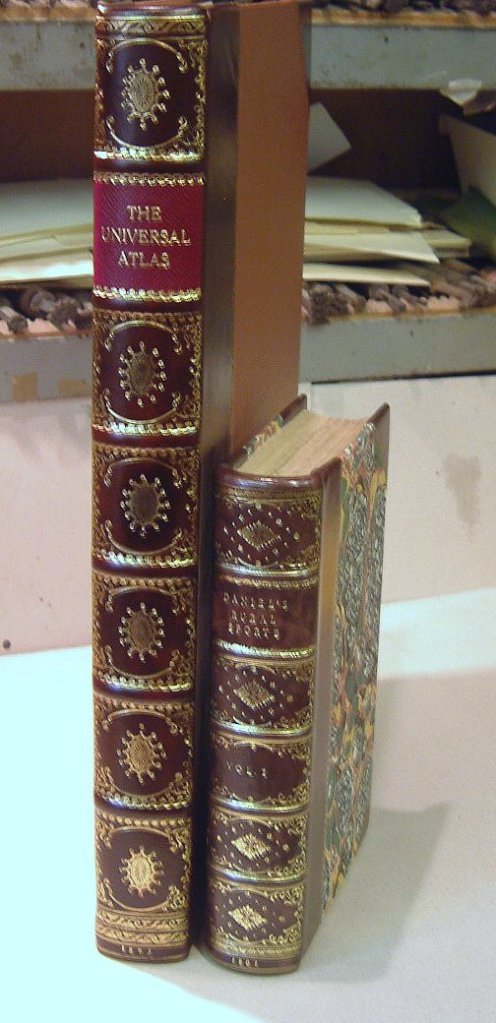
Click on the images to enlarge
English Bookbinder – Tiffany Photo Album
I also had a rather nice leather Victorian concertina photo album to restore. This one was a very rare early Tiffany’s 8 section piece that had to be completely stripped and the joints re-made, not an easy task as you can see.
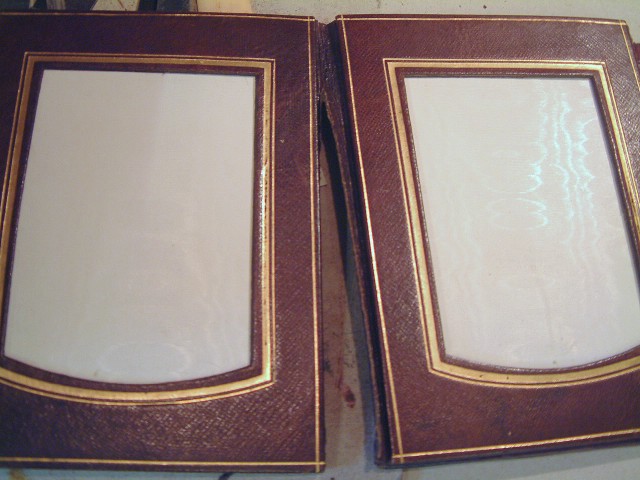
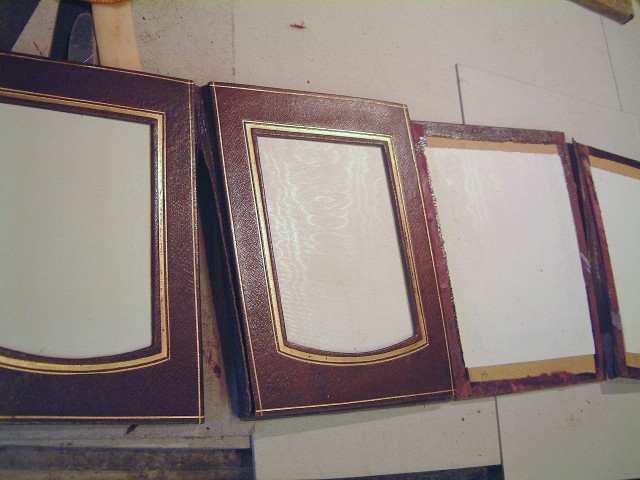
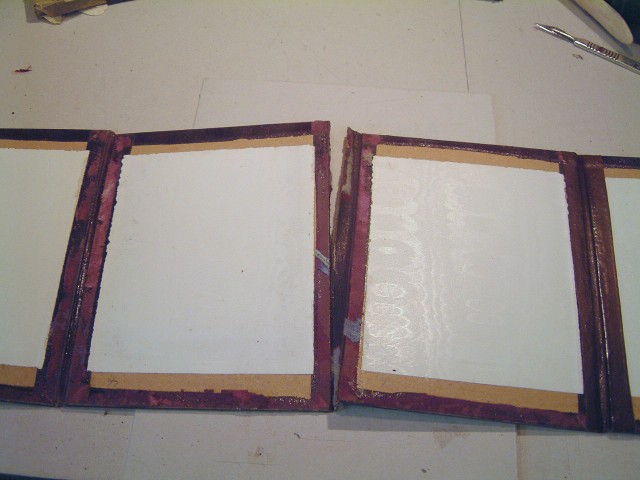
First the mounts had to be removed and the turn-ins released, the bases restored from both sides with leather dyed to match, pared wafer thin and even. Then the frames were restored and re-mounted.
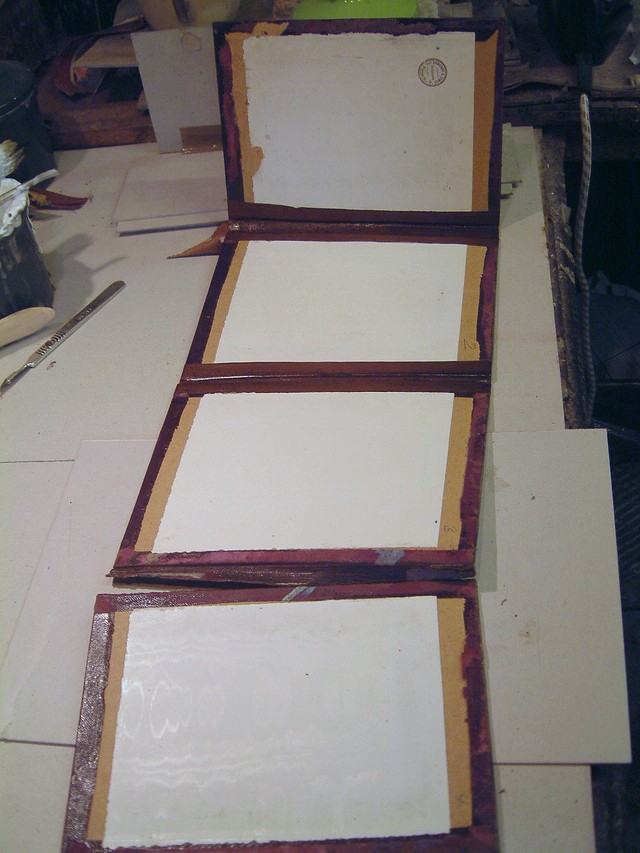
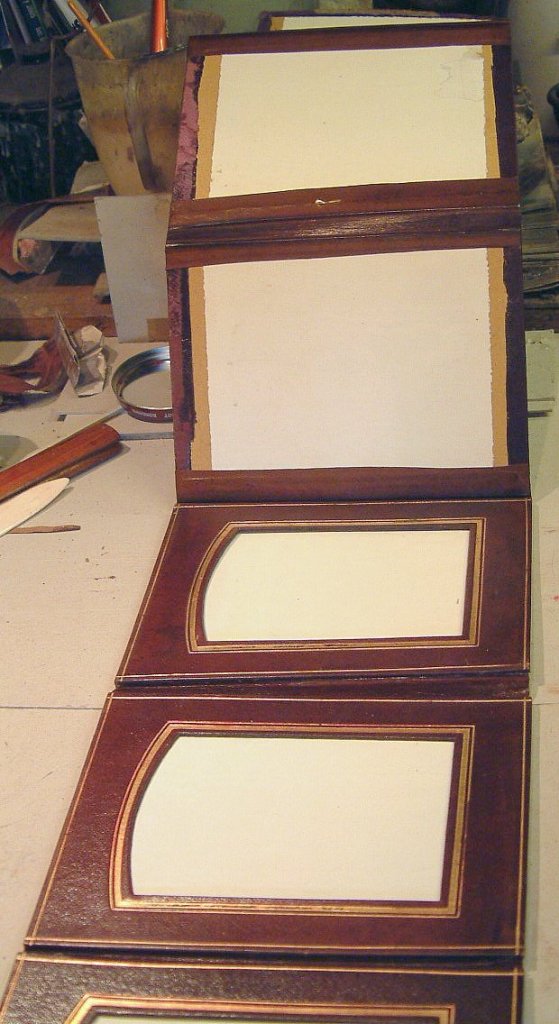
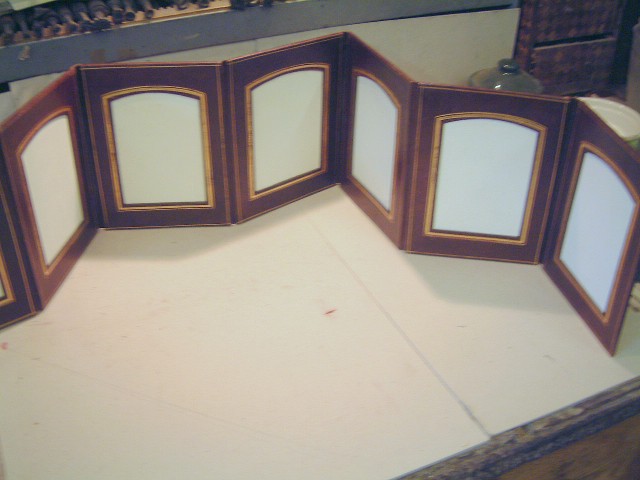
The most difficult part is to make sure the joints are exact as it concertinas into a wallet, it will never fold flat otherwise.
Bookbinding Nostalgia
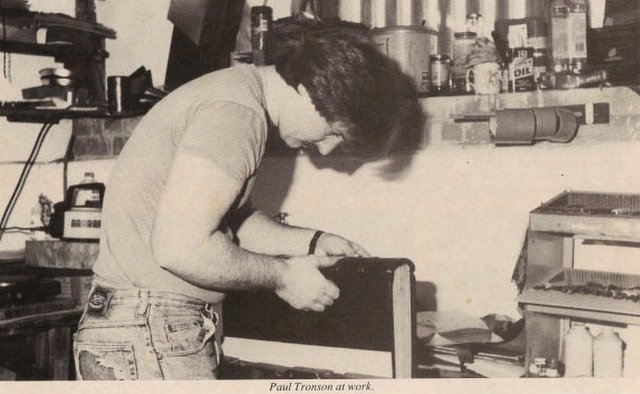
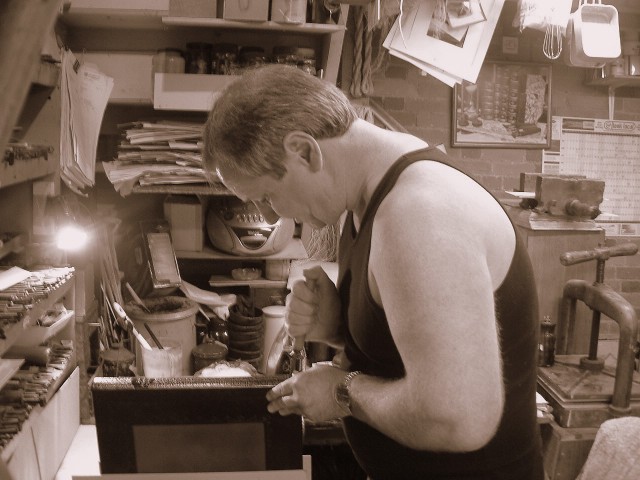
Last month got me very nostalgic so I thought you may like to see some very bad photo’s I’ve scanned from up to 20 years ago.
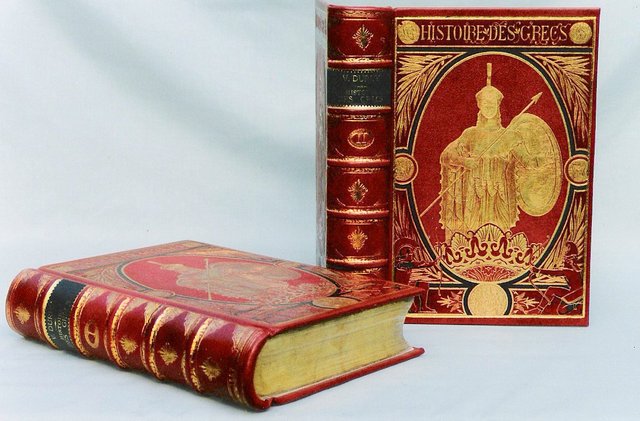
The Customer wanted a leather binding for his “Histoire du Grec” so I matched the colour of the cloth and inlayed the original cloth covers back and front and tooled a gold border around them.
The Nash’s has the rare “Amphlet volume” index that was published 100 years later by the Reverend Amphlet.
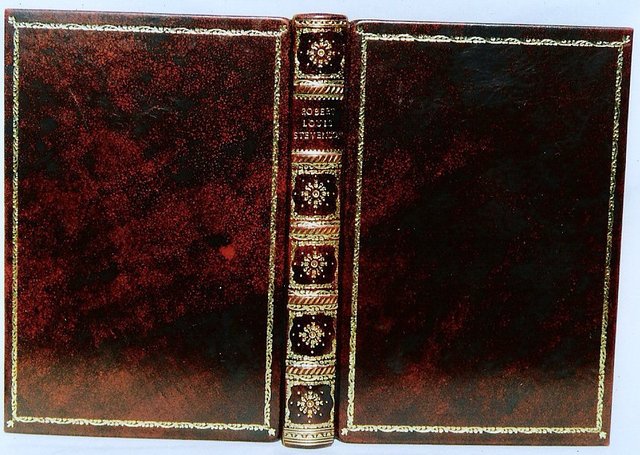
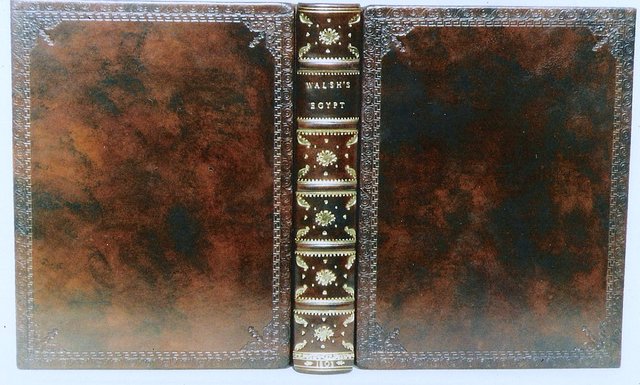
Two examples of hand marbled calf bindings………..Ahh Walshes Egypt 1st edition, hand coloured plates etched on the battlefield…..with a piece of “bloodied bandage” stuck across a torn leaf…..amateur conservation in the field of duty!!
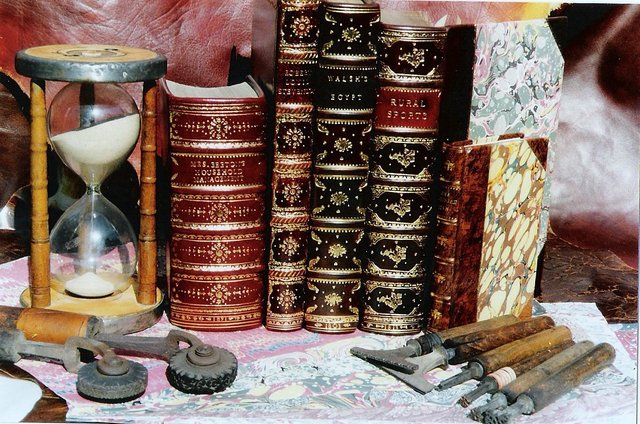
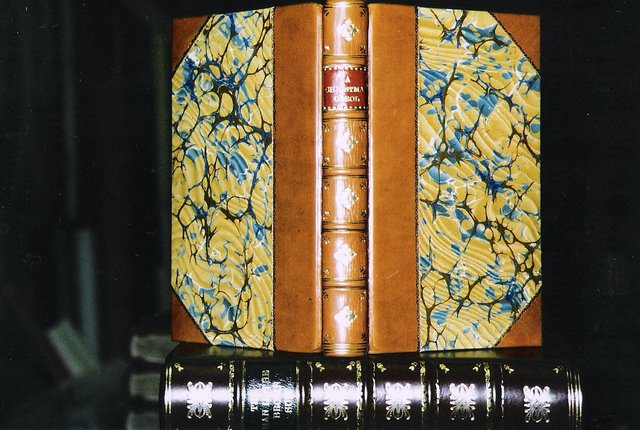
A collection of fine bindings and a 1st ed 1st issue 1843 Christmas Carol bound in 1843 (or contemporary) materials, I may do a feature on the “Art of Faking” as the materials have to be restored before they can be used.
The “Carol” is actually sat on a 1st issue of Agatha Christies “Man in the Brown Suit”.
English Bookbinder – Concealed things
At the moment I am working on an 18thC 2 volume set of Flavius Josephus from a client in Nashville Tennessee.
Apparently these have spent sometime “sunning” themselves in Hawaii and have been viciously attacked by insects and damp, but…………they have an incredible provenance having been bought in 1930 from the library of “Colonel Lawrence”….Col. who?………… Colonel (T)homas (E)dward Lawrence or “Lawrence of Arabia”.
Click on images to enlarge
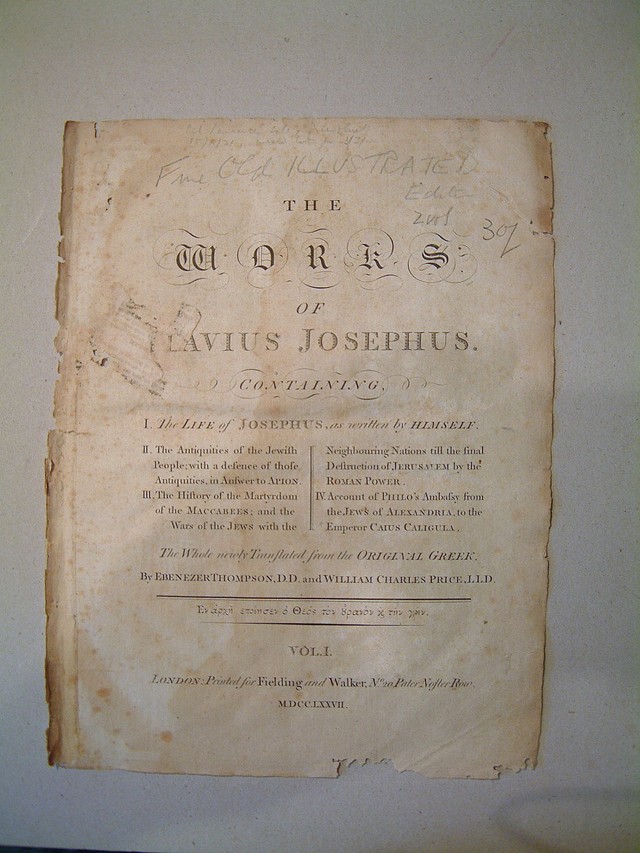
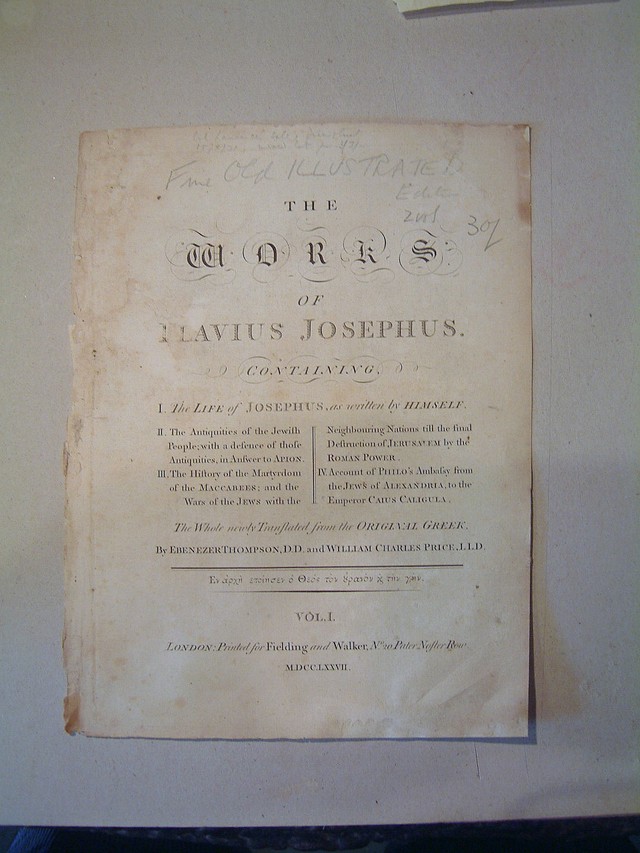
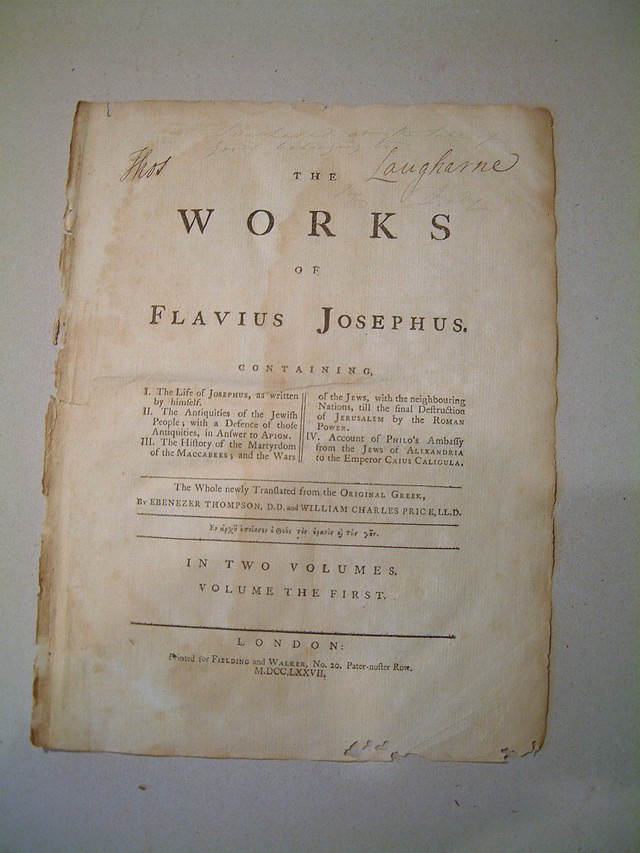
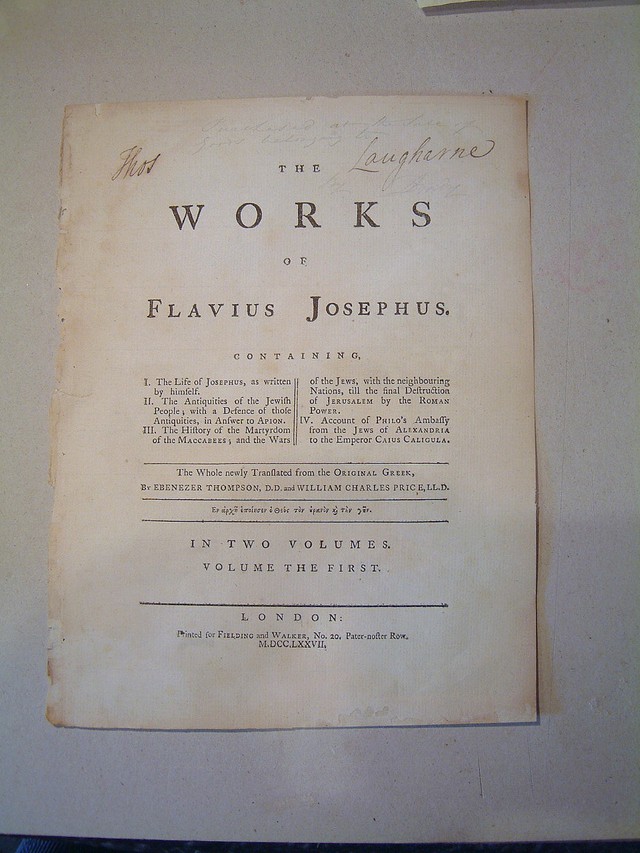
The two titles have various staining, a piece of old newsprint glued to one, and “tidemarks” (water damage), but because they have carbon and ink writing I have decided just to remove the newsprint and the tidemarks and re-size, I can “fix” the carbon and ink to the paper and remove all the stains but it doesn’t come within the budget.The last page is badly foxed and stained so I have removed the foxing and stains and resized the paper, this will be re-mounted on 18thC matching paper and the colour toned down to blend in.
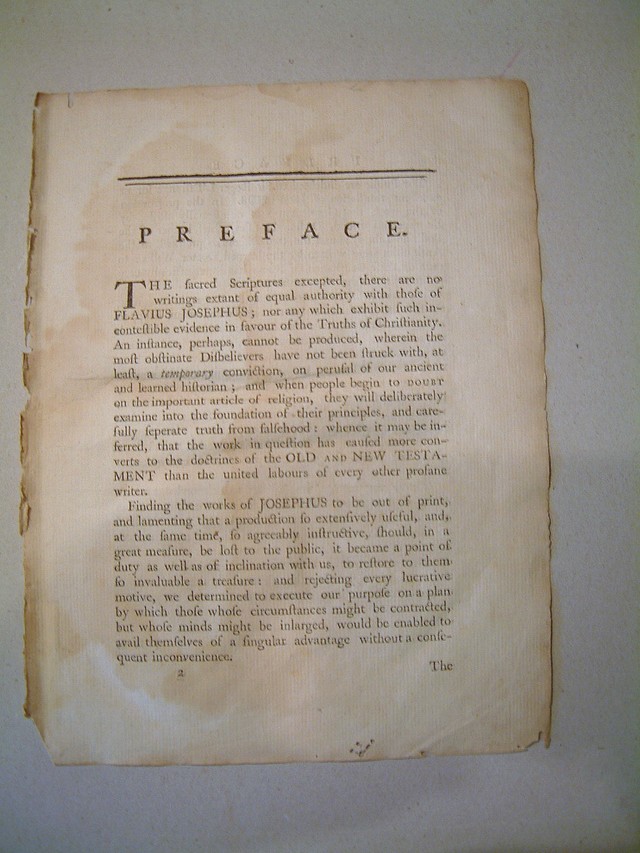
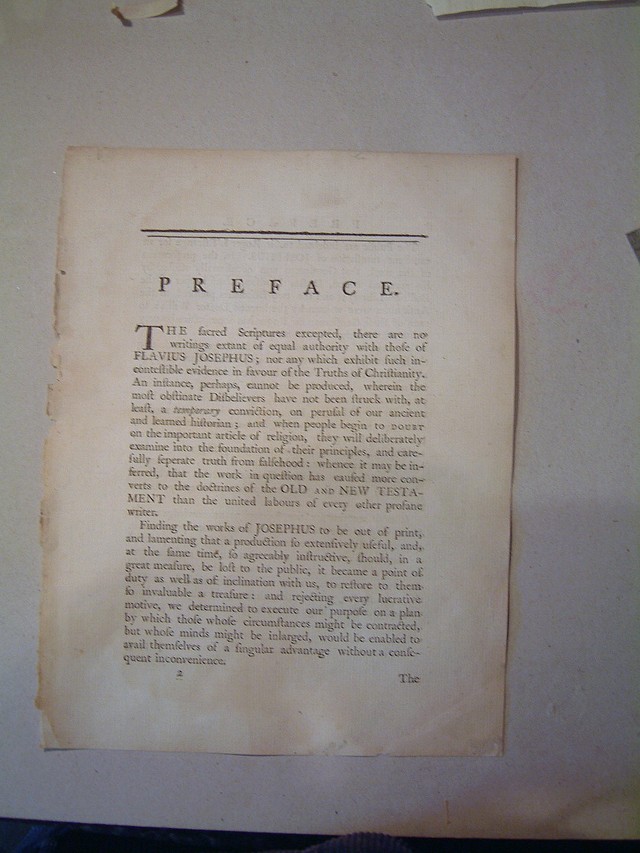
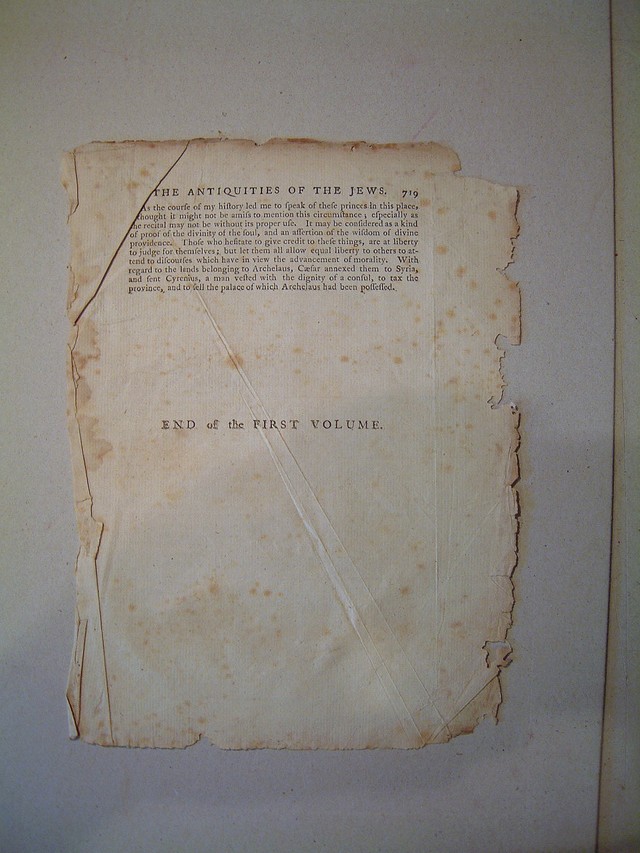
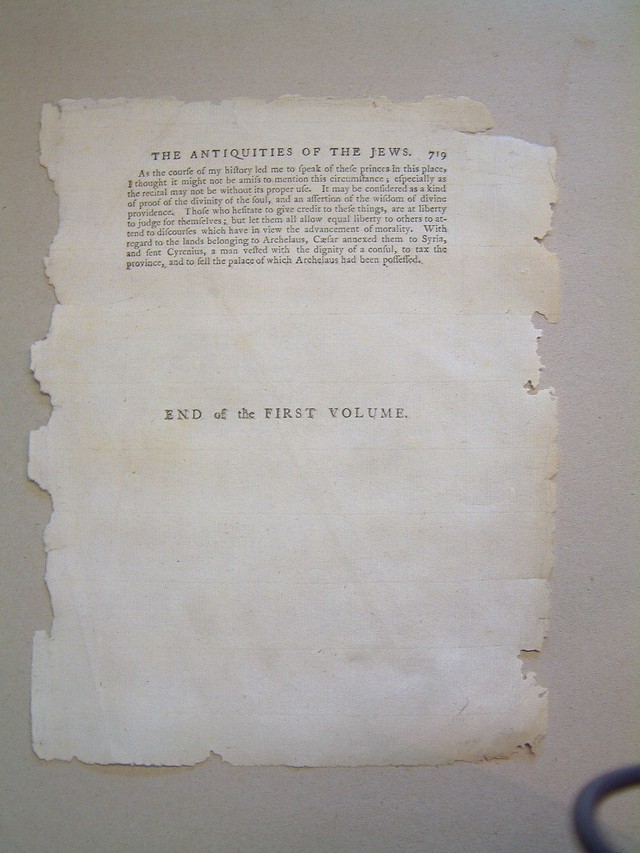
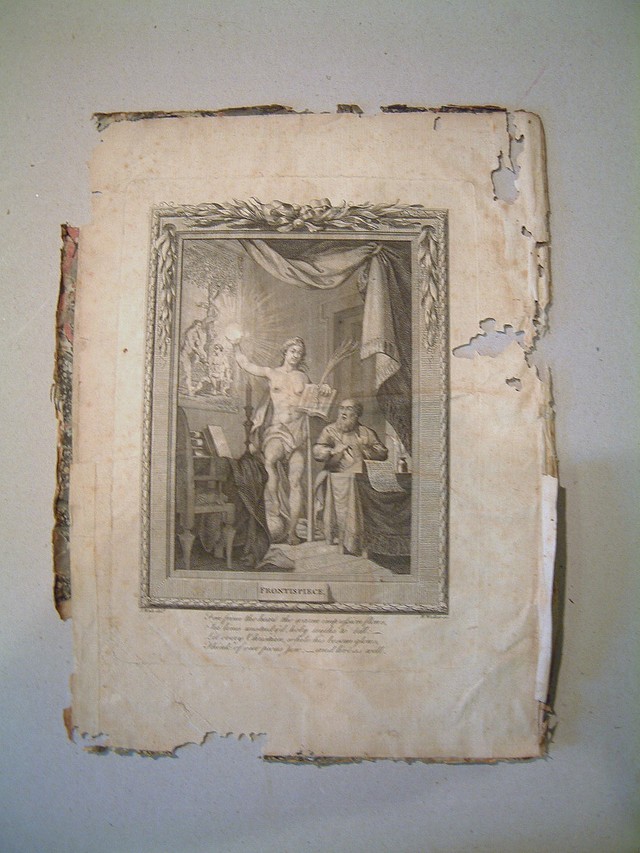
Interestingly the plates facing the title page on both books had been very crudely pasted down to the boards but not as an endpaper. My experience tells me this usually means concealment, something hidden. Many years ago I restored a rareJames I “SHE” Bible which was an armorial binding on wooden boards, when I carefully lifted the endpapers I found a vellum parchment hand written in Greek, in black and red ink under each one, I then removed the original leather from the boards and found two more!!
These turned out to be the works of Pliny the Elder and were bound into the Bible during the years of the witch hunts of Europe; they now reside as an important artefact in a museum as does the Bible, which I rebound in its original leather onto its original boards.
I have only lifted the one plate which is mounted on to 4 other layers, these need to be lifted individually as I will use them in the restoration so……..watch this space…. I will let you know my findings in the next issue.
I just can’t think of another job that generates this much excitement………..yes I can…..Archaeology
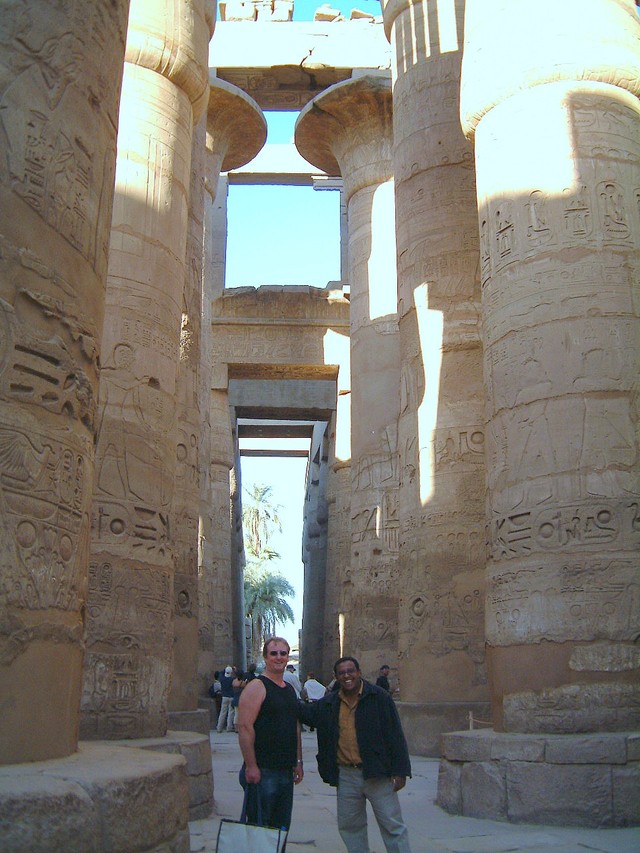
My much better half
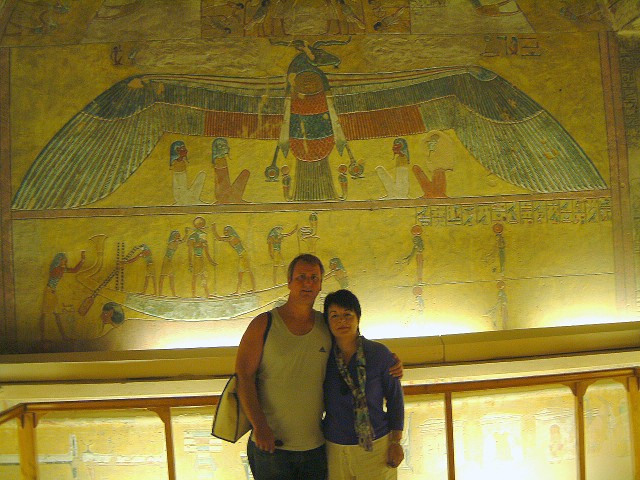
Next month I’ll show you how I parked the QEIIin a Norwegian car park
Off to Canada in August for 5 weeks if anyone wants to meet up for a beer we’ll be in Ontario!
The next exciting issue is now… HERE
To return to Issue 1 click here
Return to Royal Bindings page here
Email Paul Tronson here


Leave a Reply