Tiffany is the most famous name in fine objets d’arts since 1837 and many of their most treasured pieces have survived, but require a little tender care. View the deconstruction of two dilapidated pieces of fine art and their restoration (reconstruction) at the hands of a Master Craftsman – Paul Tronson.
Fine Objets D’Arts From Tiffany
This site is regularly updated
Since 1837 Tiffany and Co have been producing quality fine crafted goods that have stood the test of time. Those that have been neglected but have still survived usually end up in the workshop of a craftsman like myself, not only to restore the item but also to retain the quality where full restoration is not practical.
Here’s a few examples in ‘Before’ and ‘After’ photographs
click on images to enlarge
Deconstruction:
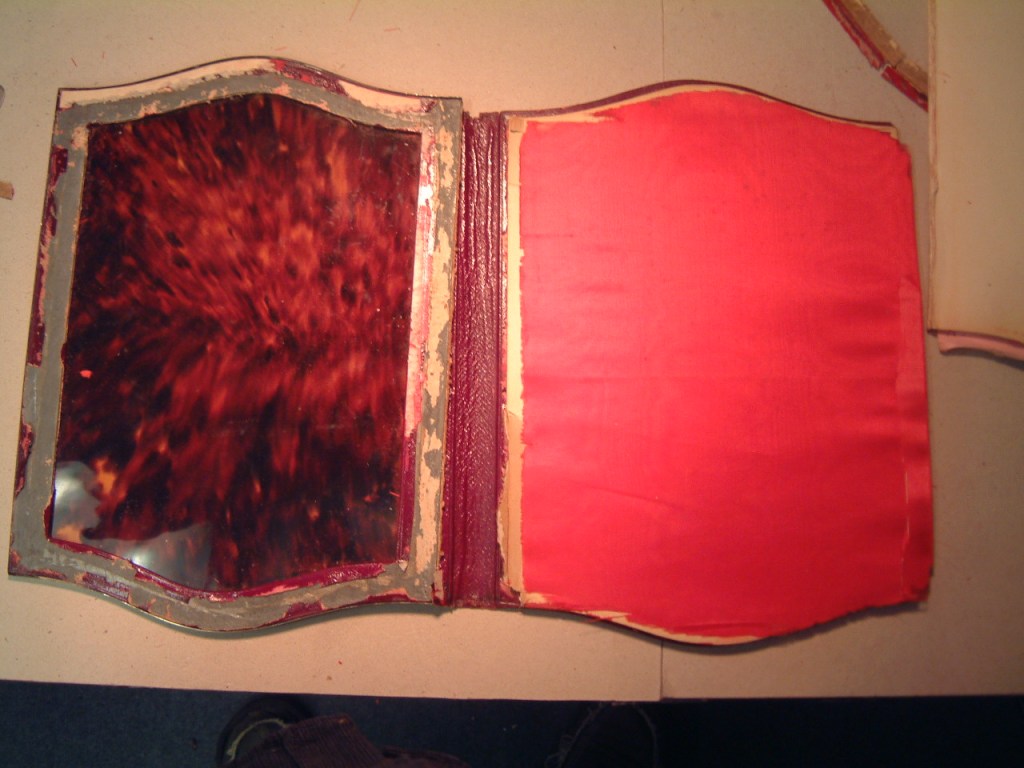
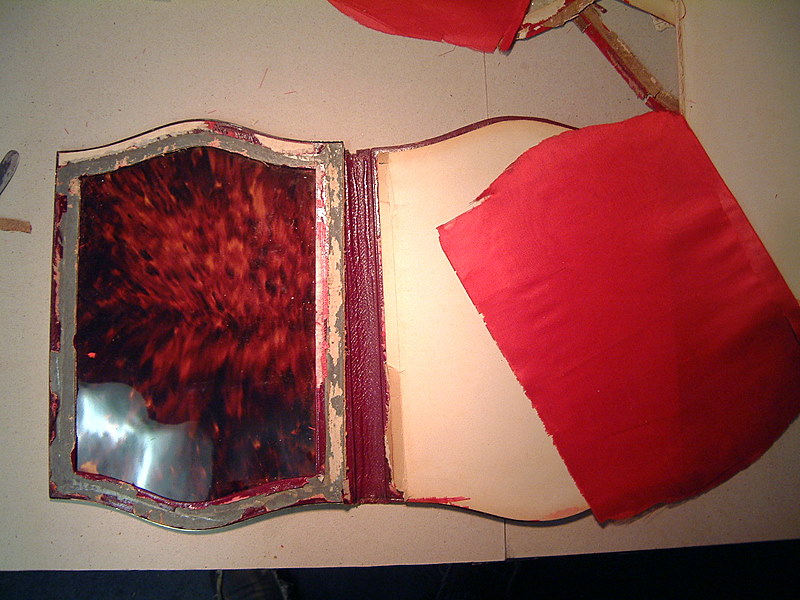
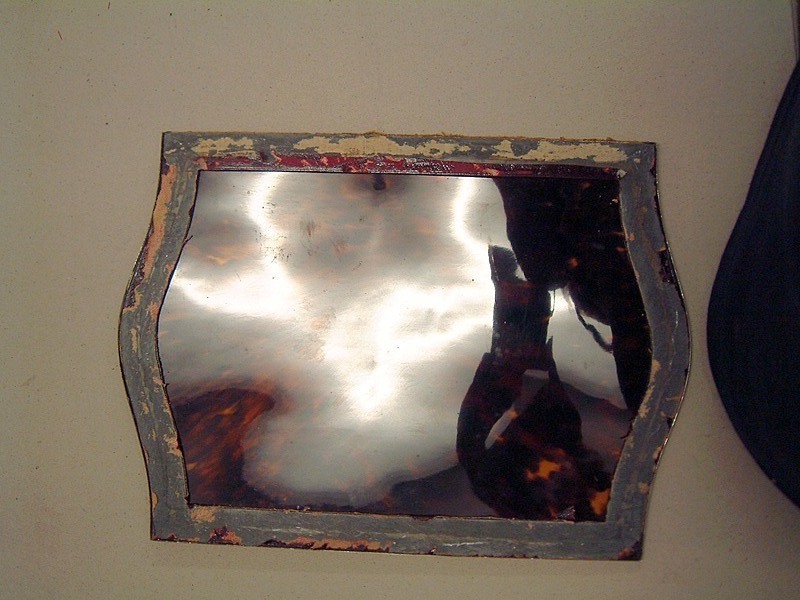
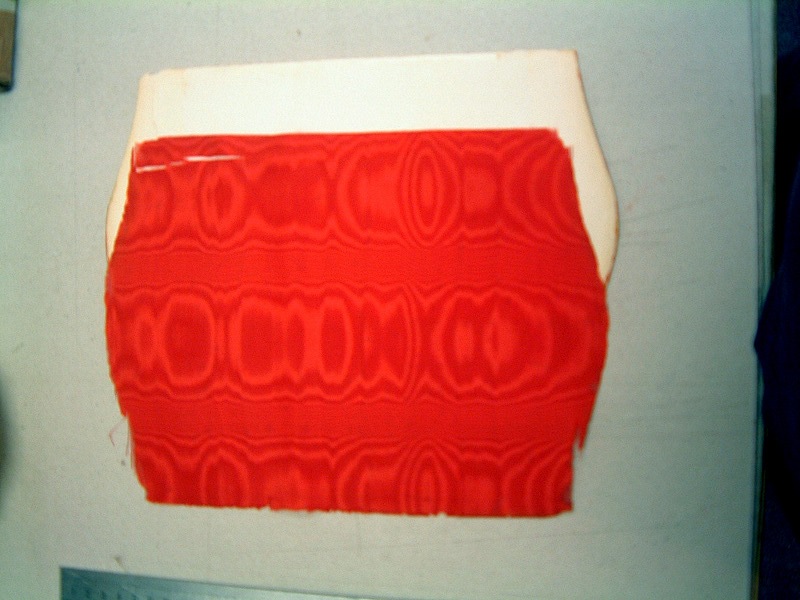
This is a rare silk lined tortoiseshell blotter from Tiffany & Co London circa 1869
The silk has perished, so has the leather.
The tortoiseshell has a zinc support frame with a mounted hallmarked silver frame over it held together with tiny silver nails.
Reconstruction:
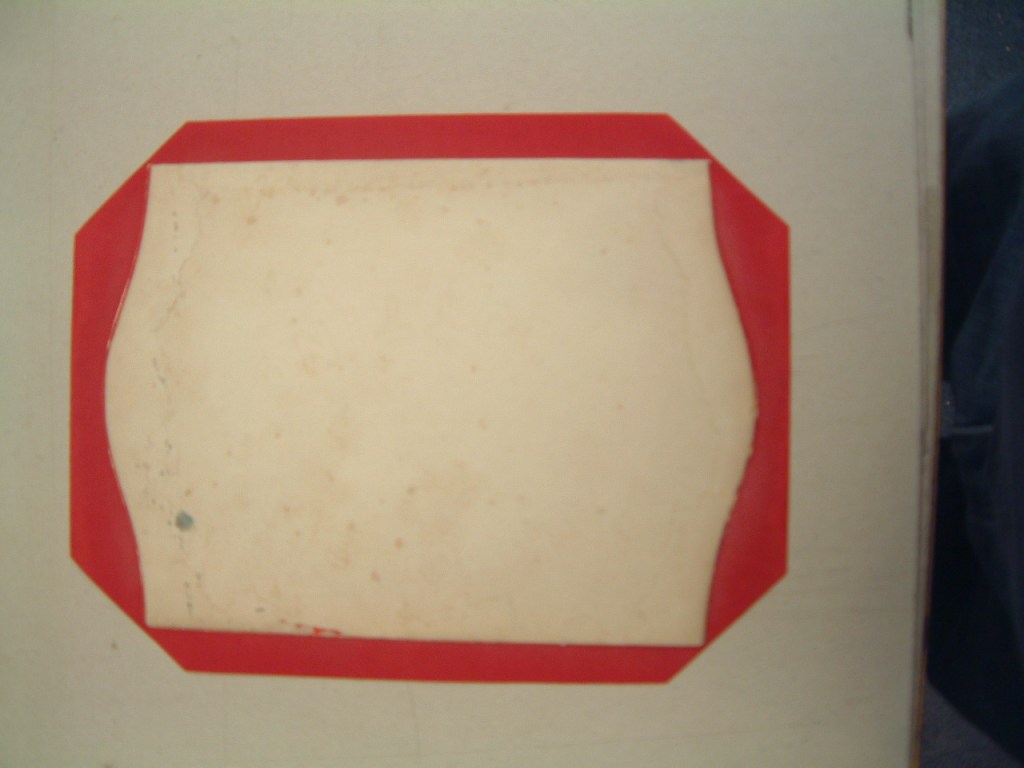
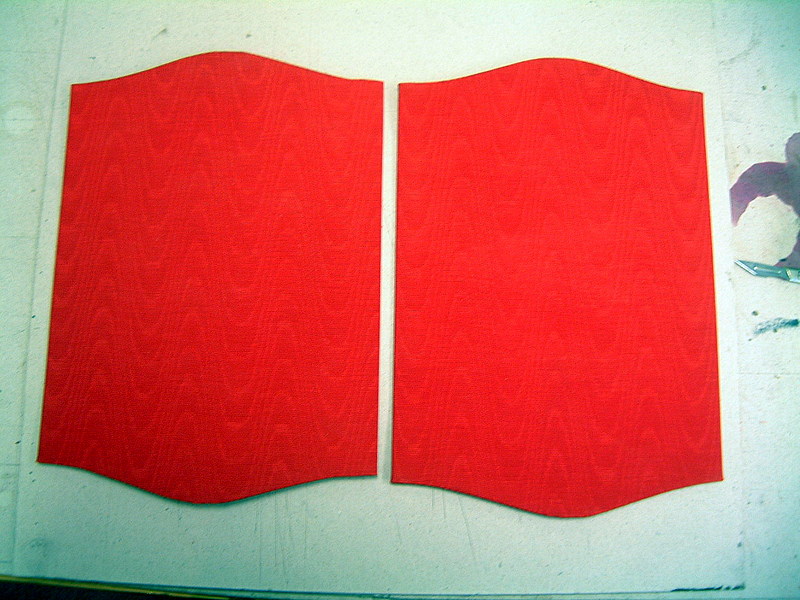
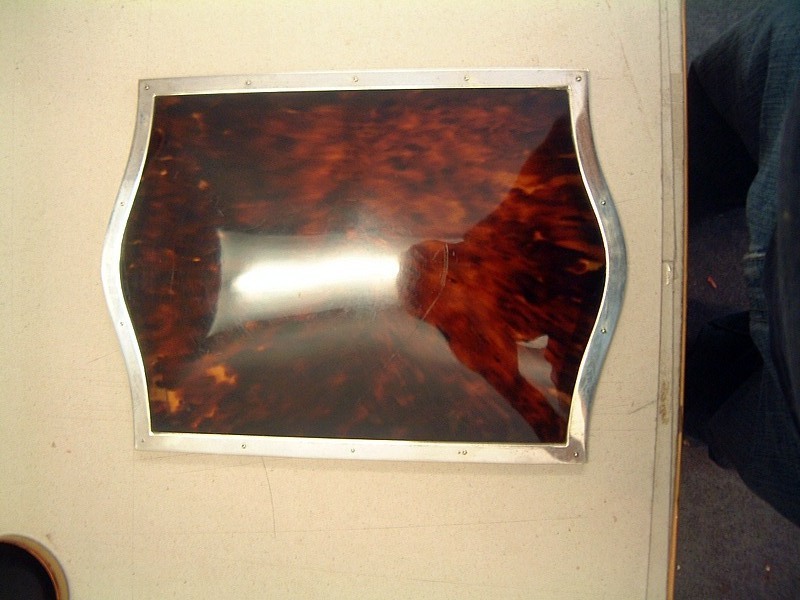
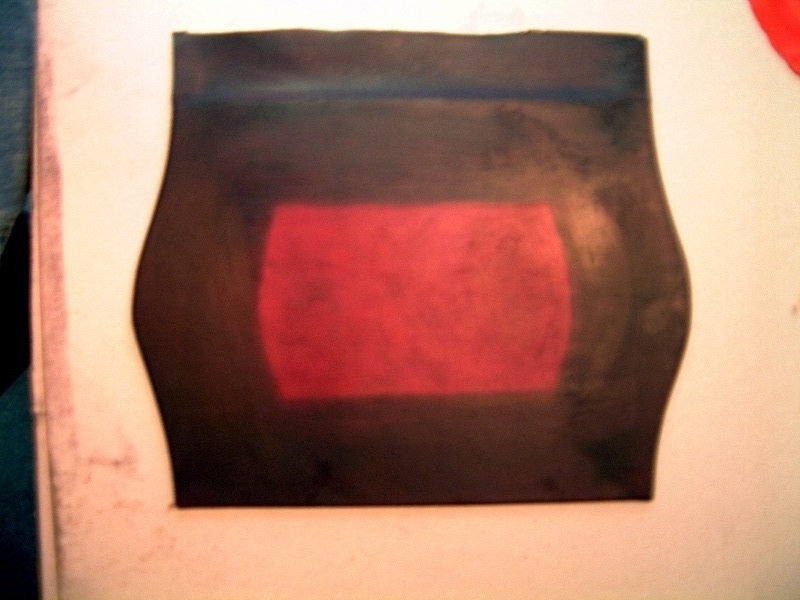
I’ve removed the silk from the liners and I’m re-using the original liner boards and re-make with new matching silk. The tortoiseshell and silver frame are cleaned and restored and a new back is cut,shaped and covered in a natural veg tanned calf which is then coloured using 2 fermented vegetable dyes. The cover is then coated with a “tallow” to prevent the tools burning into the surface of the leather.
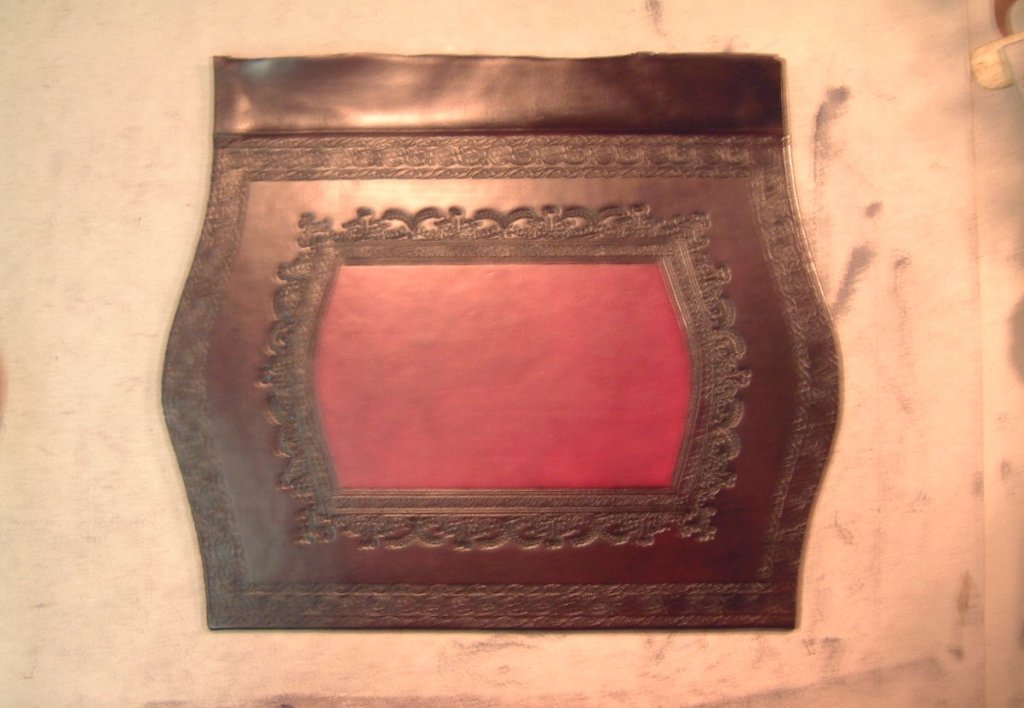
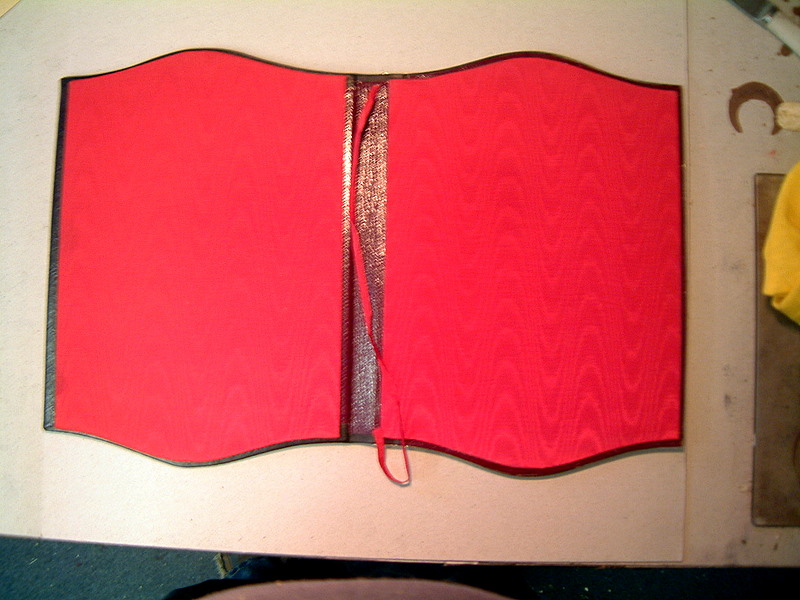
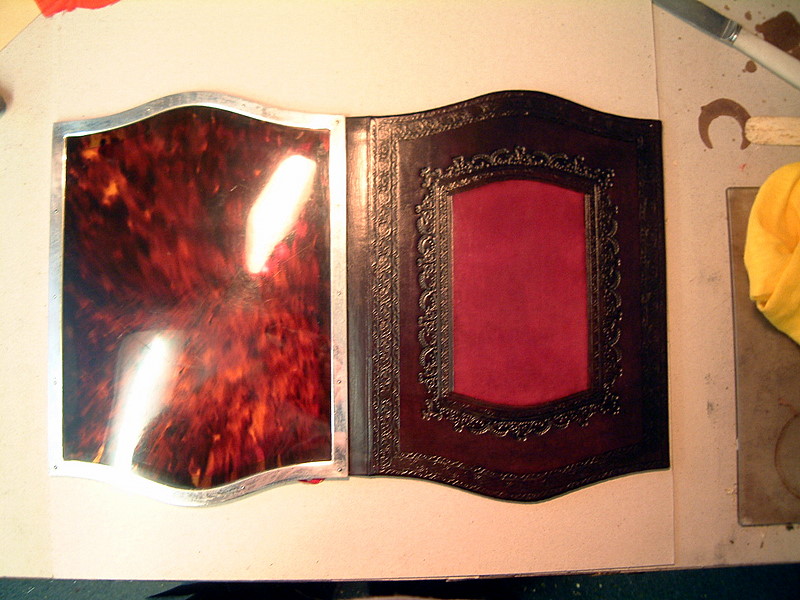
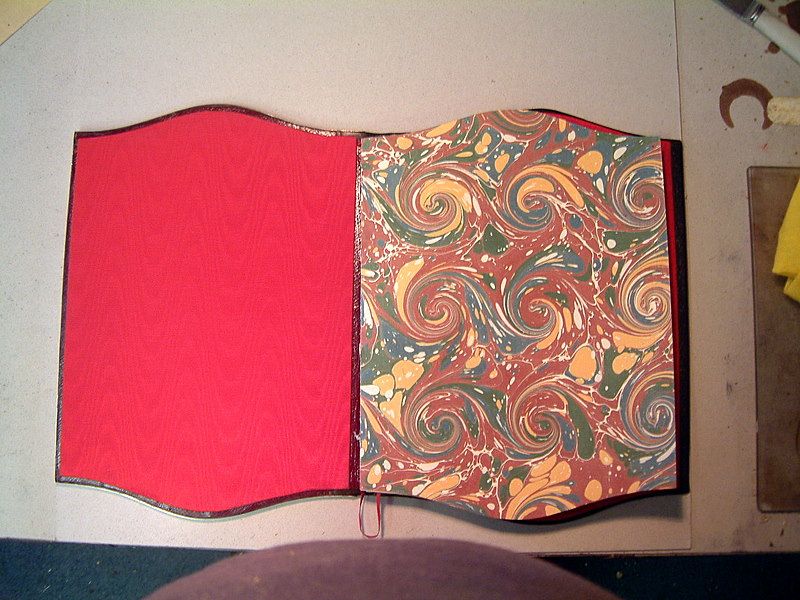
The tallow is removed after blind tooling and the covers married together. The silk linings are glued in place and a silk ribbon is attached to the spine centre to hold in the original blotter. After restoration it is lined with a hand marbled paper cover.
Tiffany Silver Blotter
Then there are those big old heavily engraved silver blotter, boy do they take some cleaning!….this one has had that much silver polish over the years it’s rotted the willow calf it was mounted on!
click images to enlarge
Deconstruction:
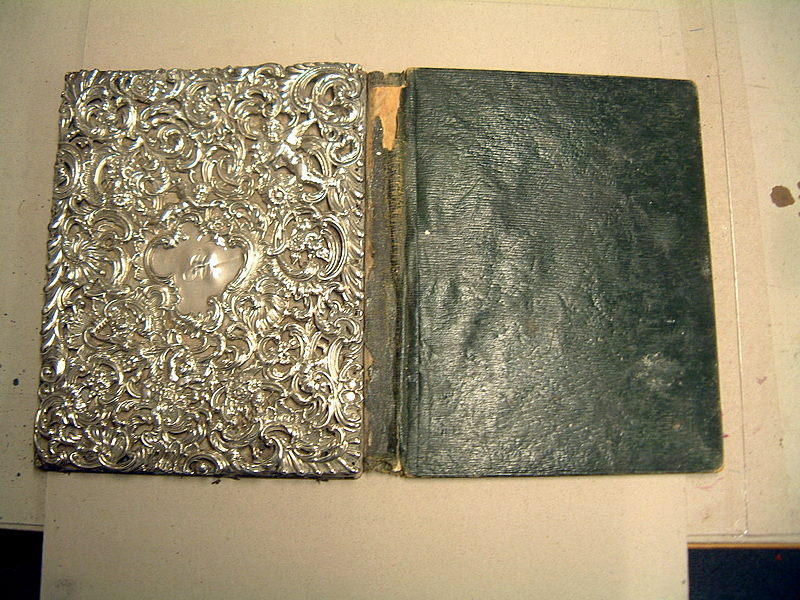
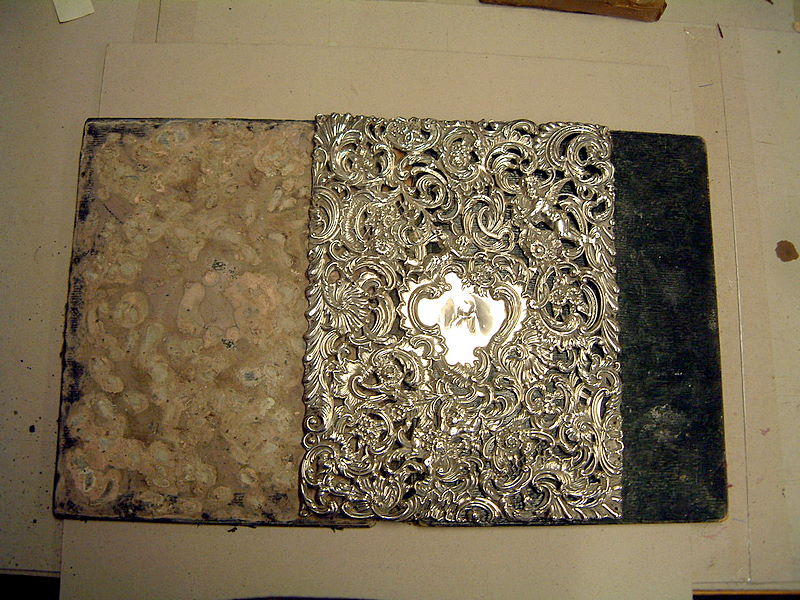
Reconstruction:
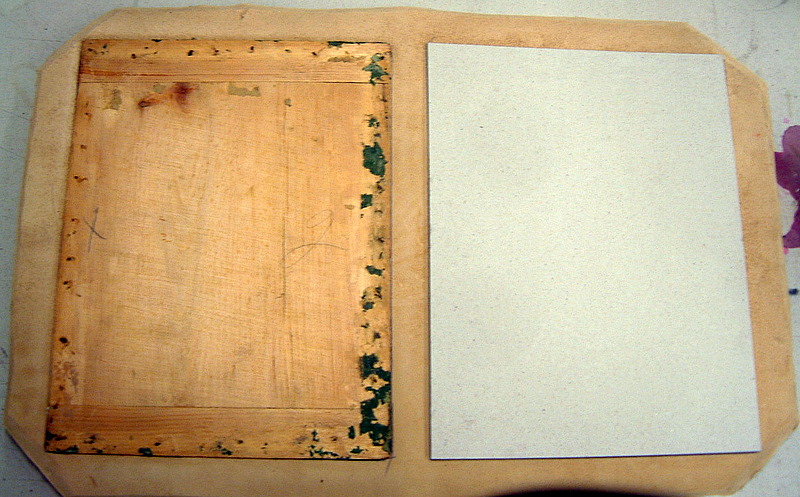
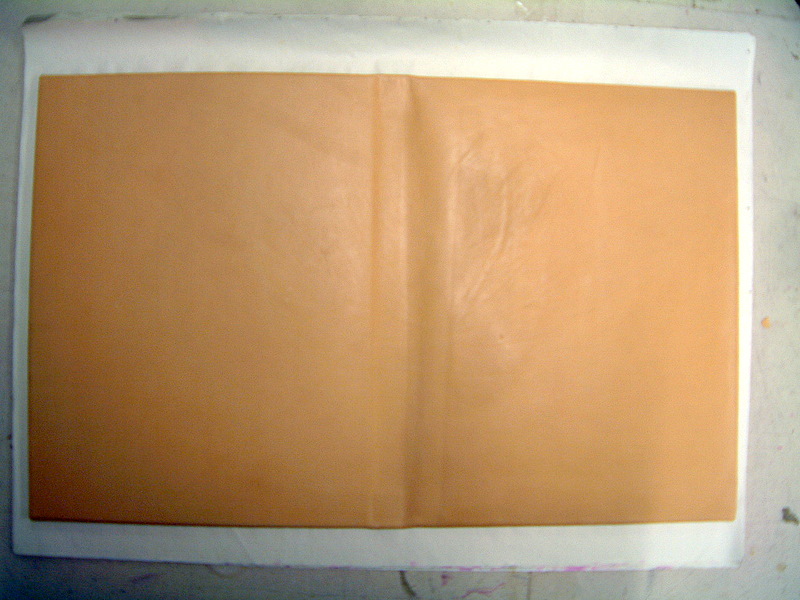
So first I’m going to carefully remove the silver plate taking care to keep the original nails, and then remove the leather (what’s left of it) from the bevelled wooden board, re-sand the old glue off the wooden board and cut a new board to the same size. New leather is cut and pared and the boards mounted and turned in.
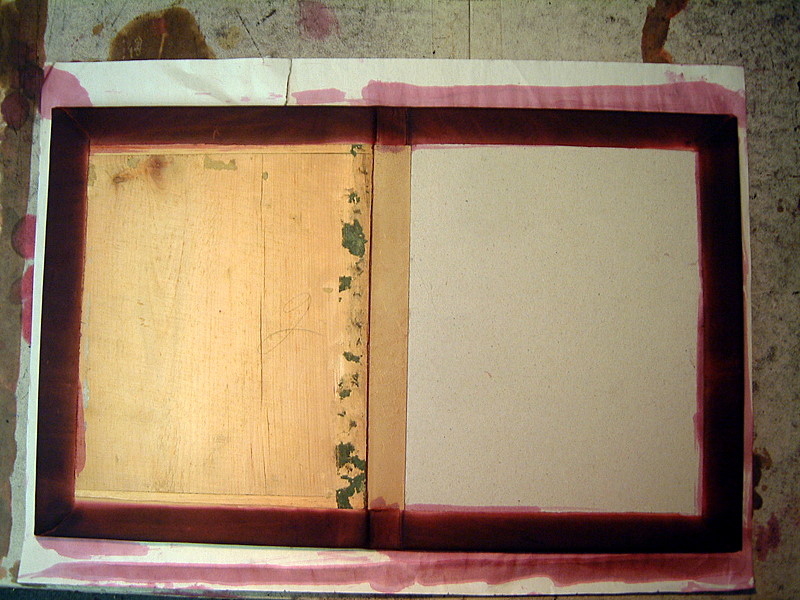
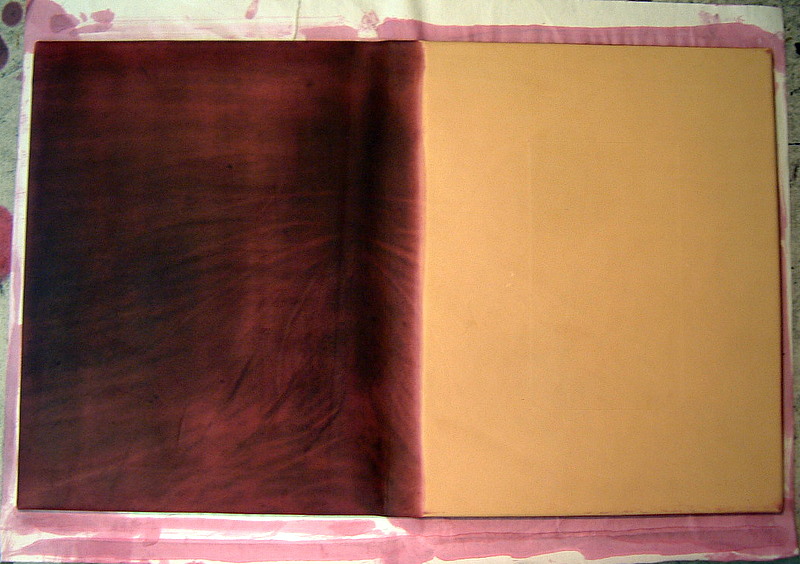
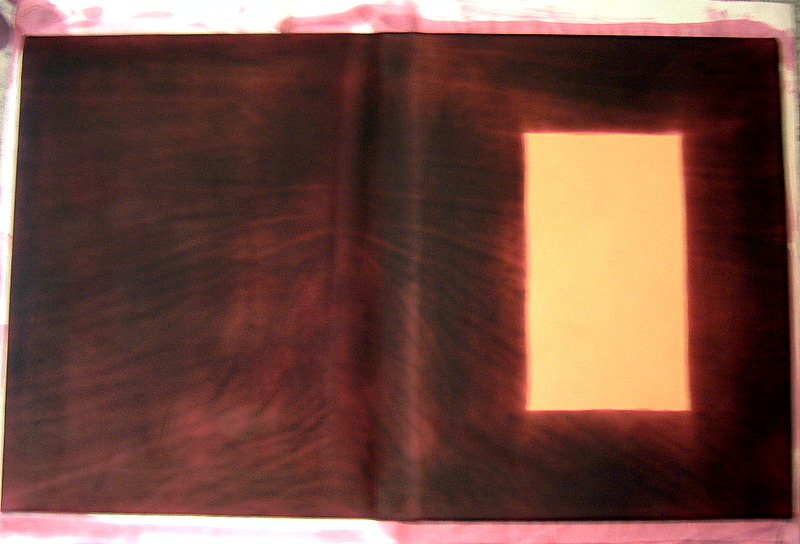
The turn-ins are then coloured as is the front and back, leaving a space for the second colour.
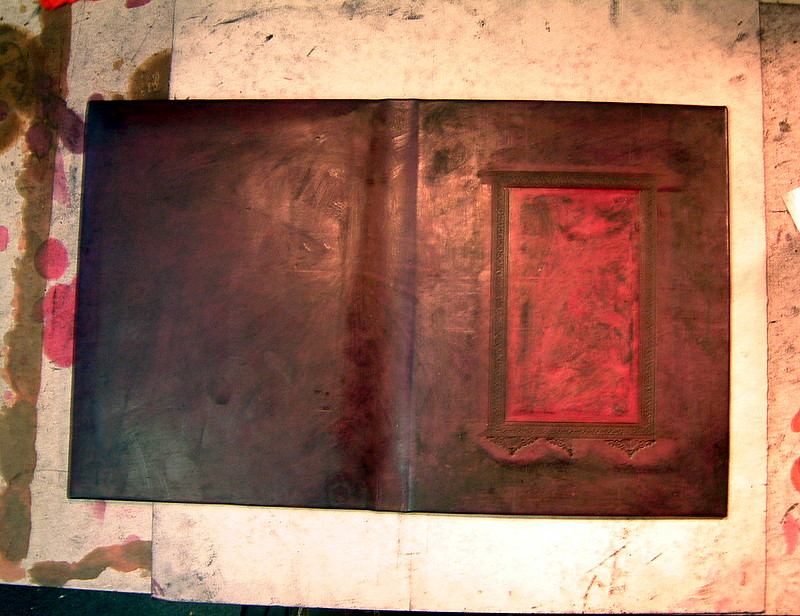
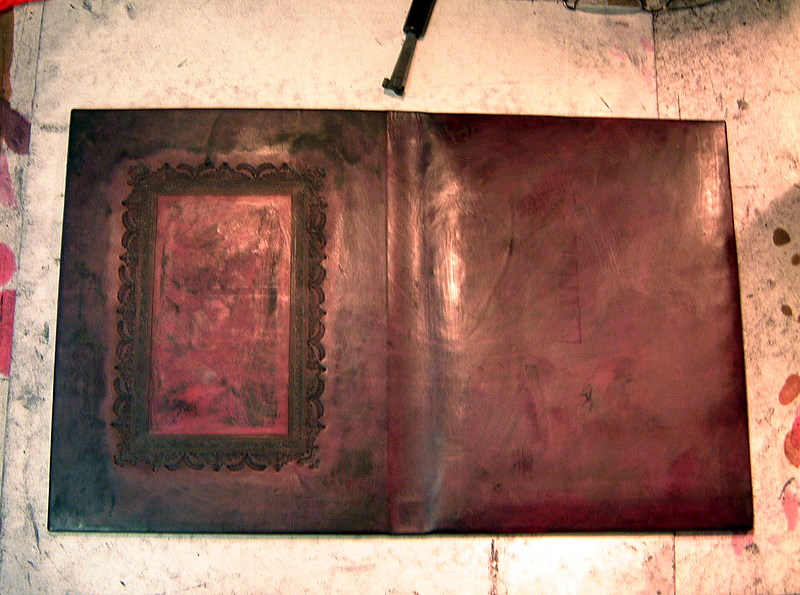
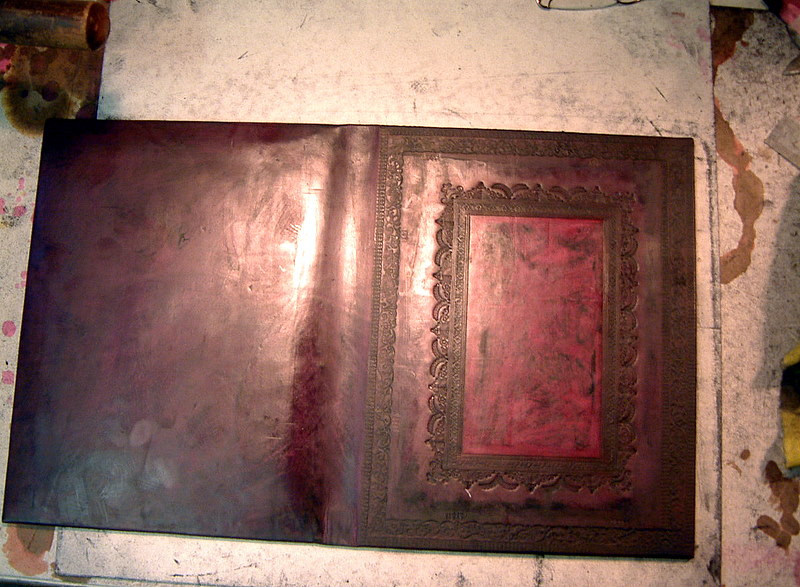
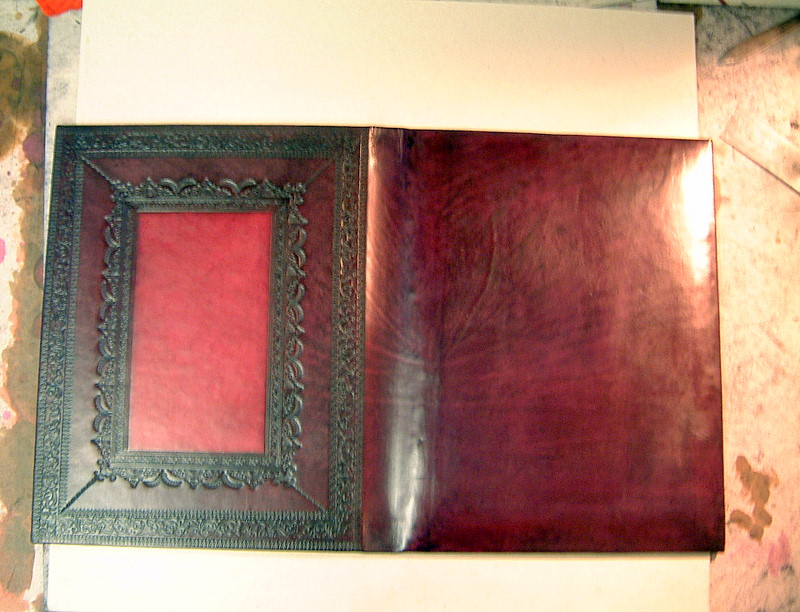
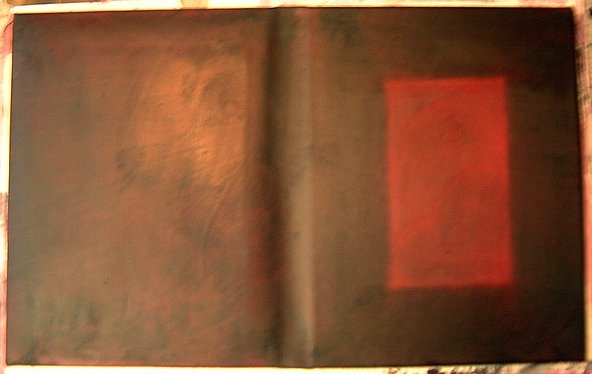
The cover is then covered with tallow as a whole and blind tooling commences using a series of left and right small tools The borders are then tooled with fillet rolls The tallow is then removed and the cover polished with a hot polishing iron.
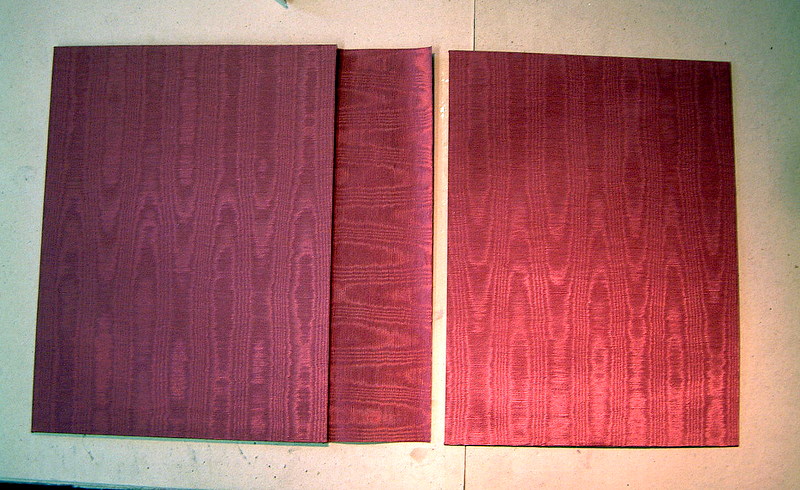
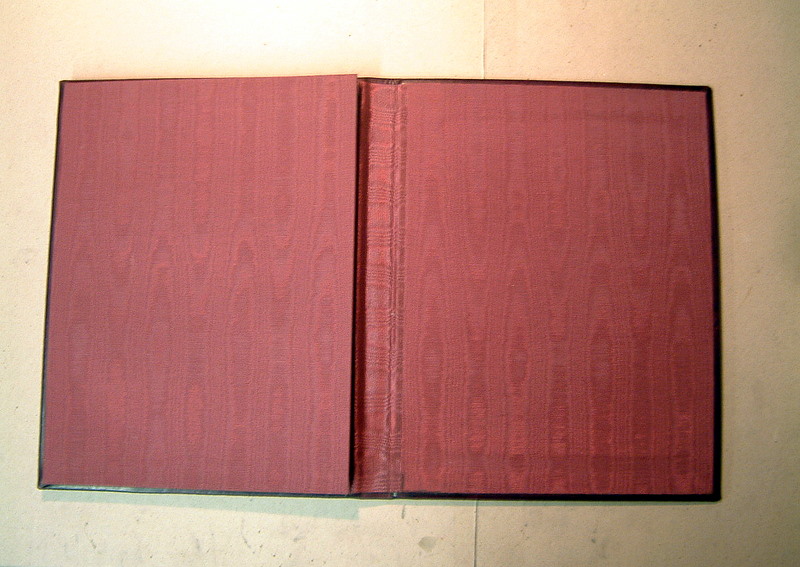
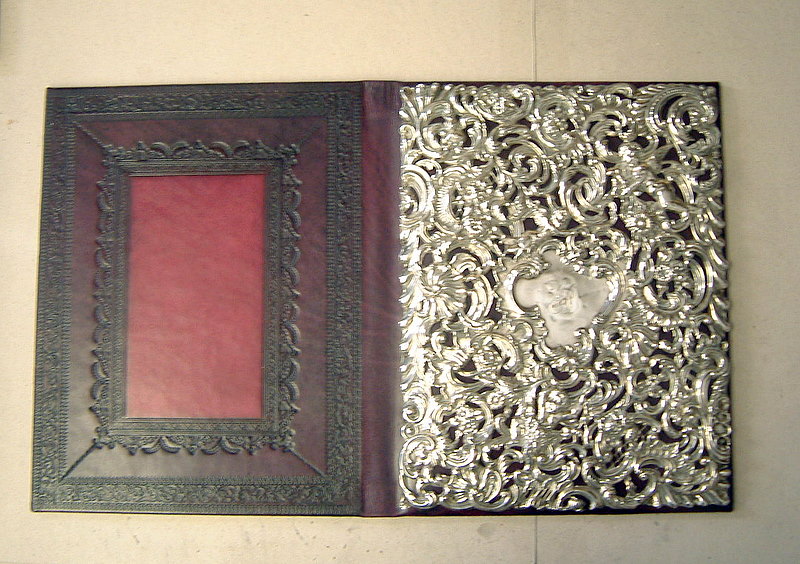
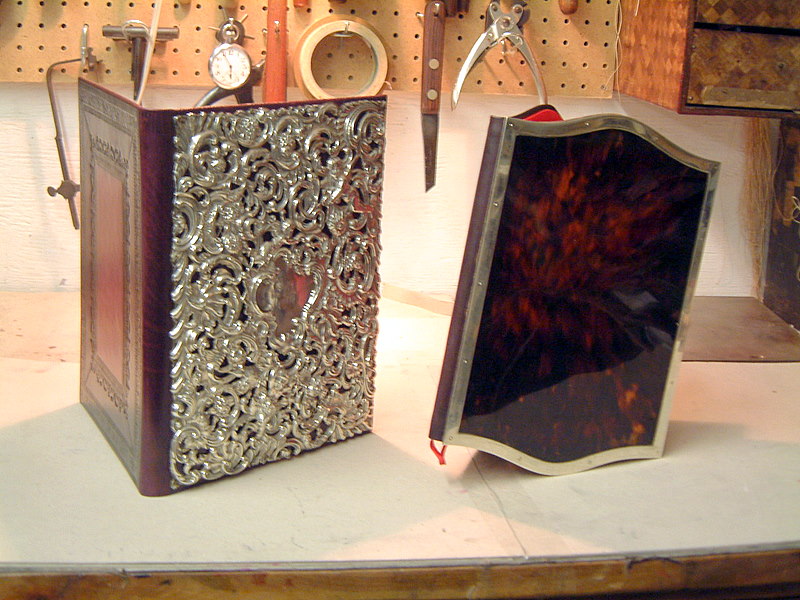
The silk is cut for the back liner and a wallet is formed also. The silver plate is polished and attached to the wooden board…..Job done!…And now we have two valuable Tiffany blotters saved from extinction.
Tiffany Picture Frame Conservation
This one is a rarity….an 1840 Tiffany case comprising of 8 picture frames concertinered to fold as a neat case.
Click on pictures to enlarge
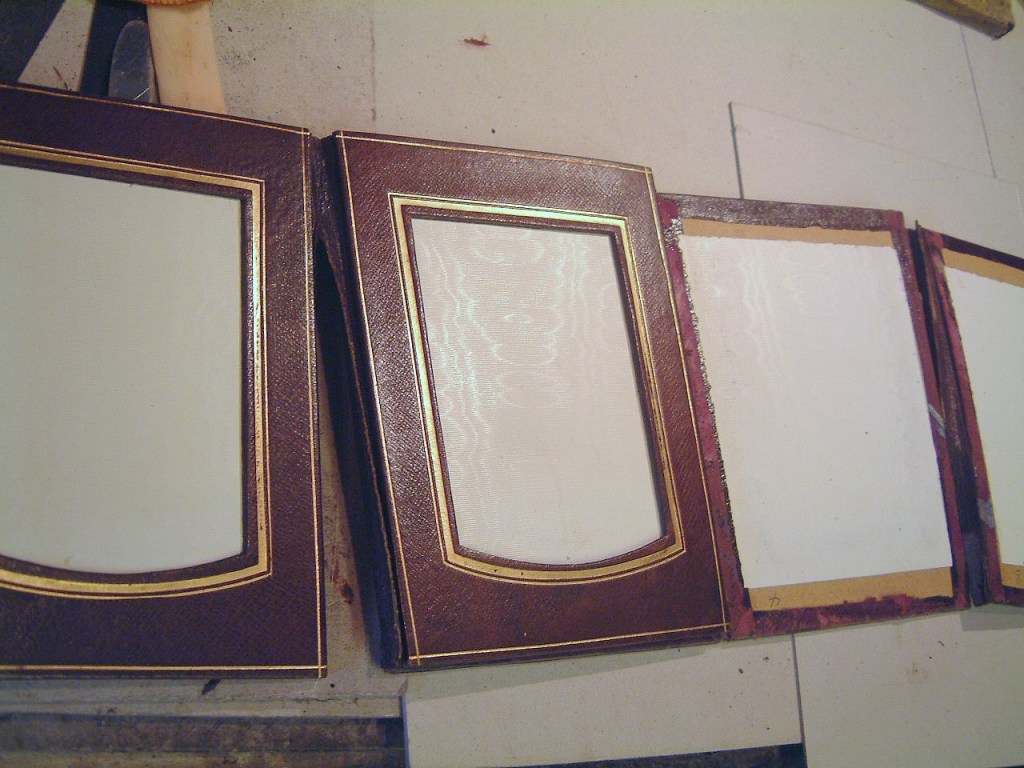
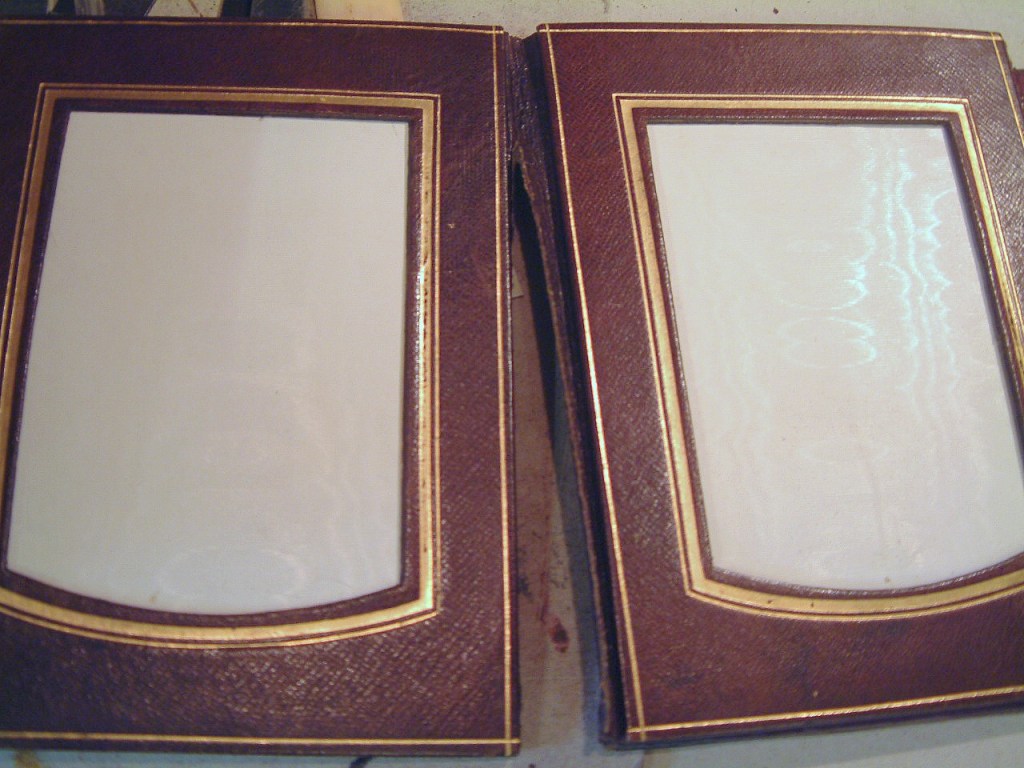
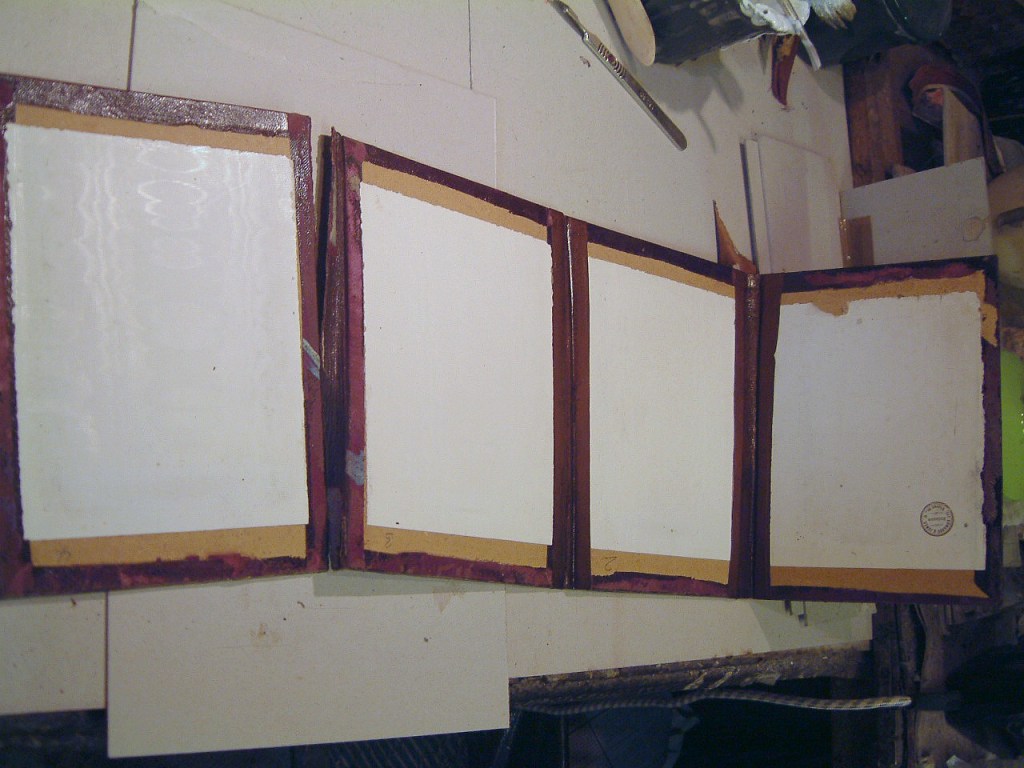
It is even stamped “Tiffany & Co London 1840” All of the frames need to be removed and re-jointed with matching leather, pared as thin as possible.
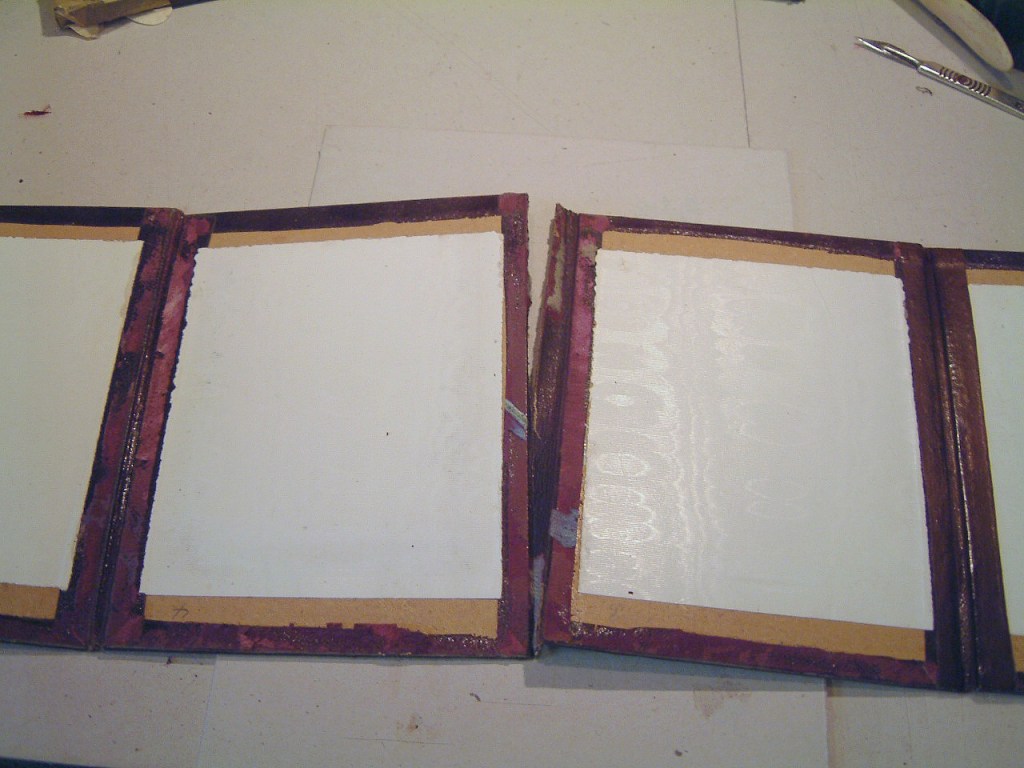
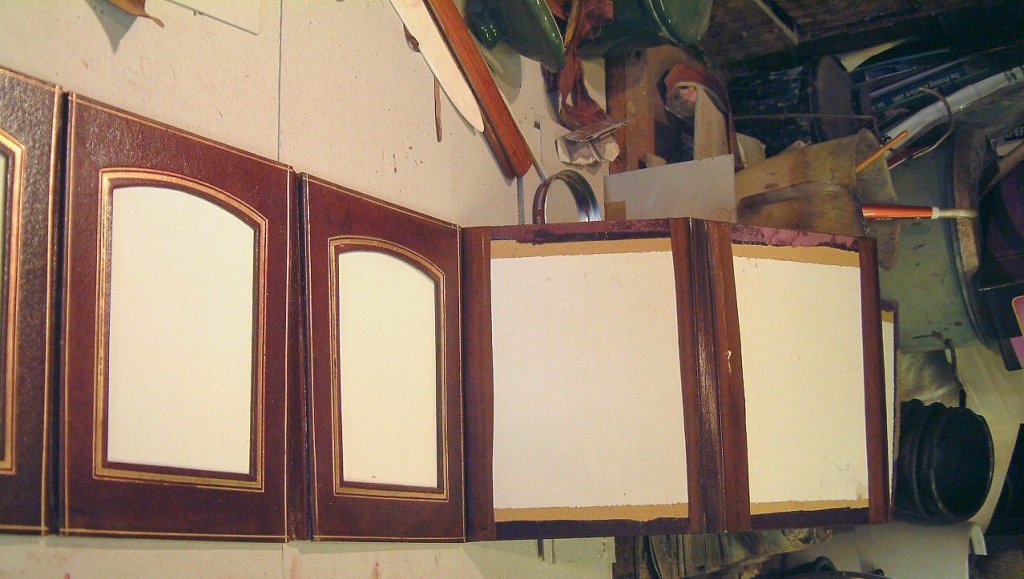
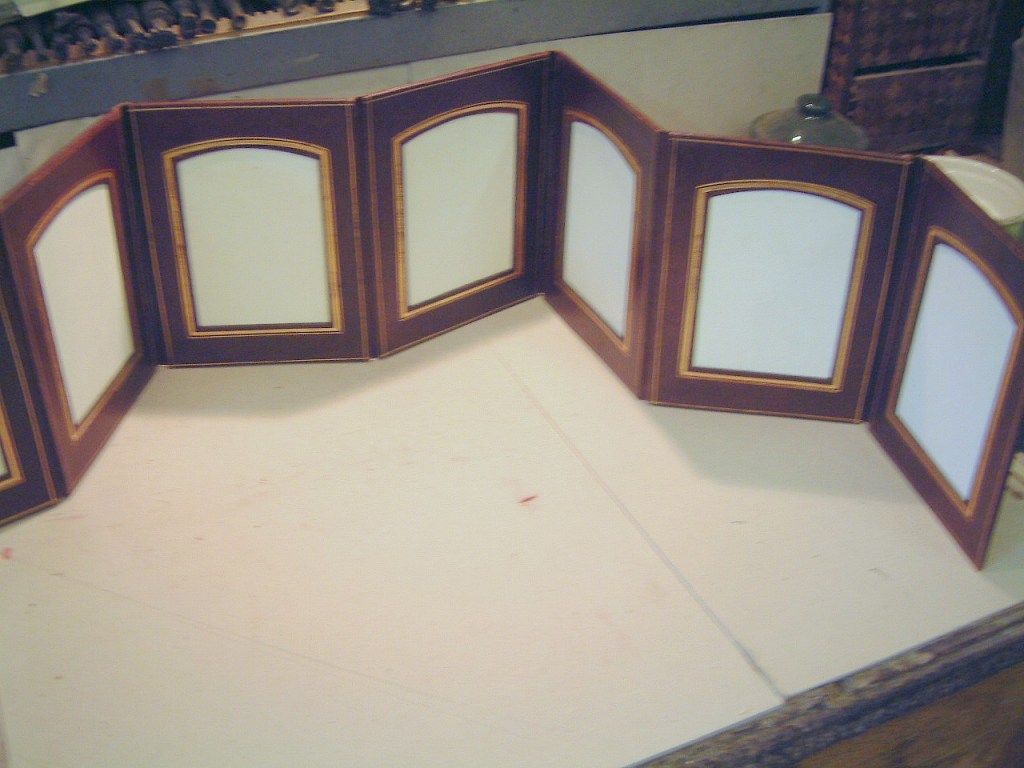
Restoration is always a little tricky, but performed correctly it will add great value to any heritage piece.
Next Page – Edge Gilding by hand
All content and copyright are the property of Paul Tronson
Period Fine Bindings 1983 to infinity All rights reserved.


Leave a Reply